
It's been a little bit since my last post! Things have been pretty busy, despite us still being closed to the public. We still aren't sure when the County will allow us to reopen, but rest assured, we have a plan to reopen as soon as the County gives the green light.
| A week and a half ago, I was at home after work and Jim from the Historical Society called. The Times-Standard building was being cleaned out following the removal of their printing press and one of the workers was charged with clearing out a storage room full of newspapers. Concerned that they would be headed straight for the dump, the worker, named Thomas, called Jim, saying that the room needed to be cleared out by Friday, which was two days away. He asked if the Historical Society wanted to take up the Archive. So, Jim called me. | 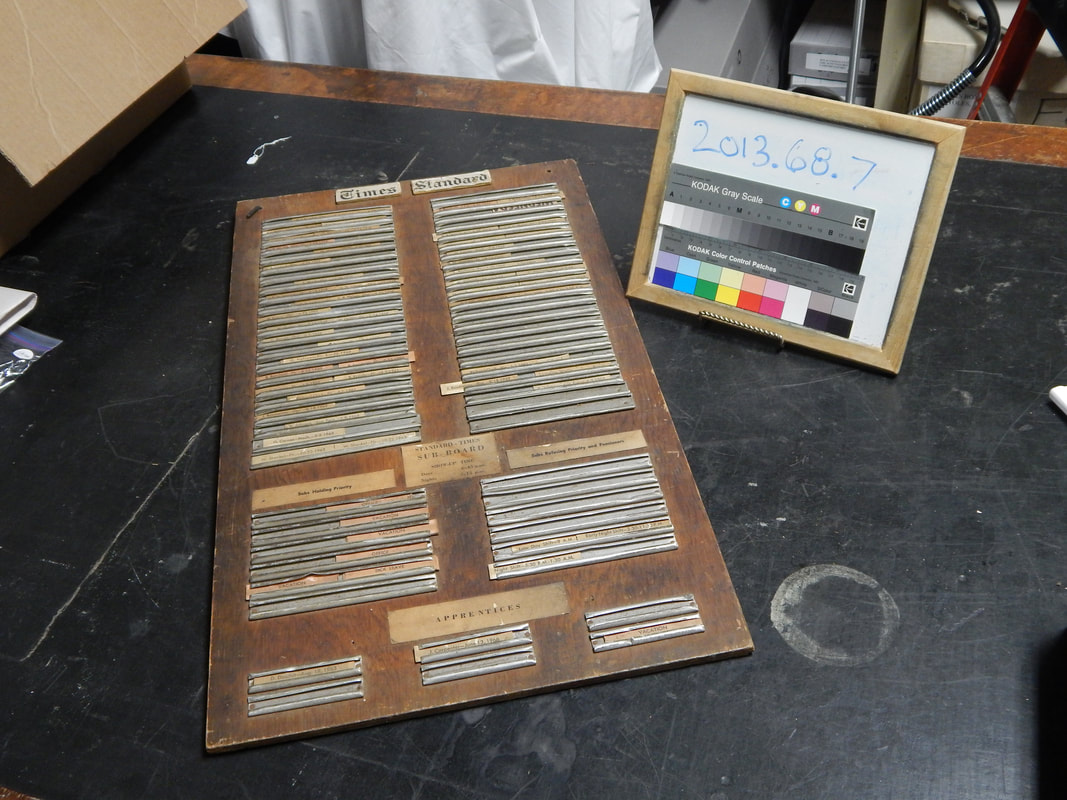 An item from an earlier Times-Standard. This is a priority board showing work & off-time allocations for workers. |
Jim and I rapidly put together a plan to determine how much material was to be moved, find a place for the newspapers and get volunteers to help move on a really quick schedule.
Why does this matter? While these newspapers are pretty much all microfilmed - scanned onto small pieces of film that can be scanned and read through a specialty machine. It's a standard for document preservation- however when images are microfilmed, they are often disfigured or completely unrecognizable. Having access to the actual print papers allows for scanning using a digital scanning, preservation of the images, and another copy of the papers in case something happens to other collections (redundancy). Scans of these papers can also be made available to free services like the UC Riverside California Digital Newspaper Collection and paid services like Newspapers.com.
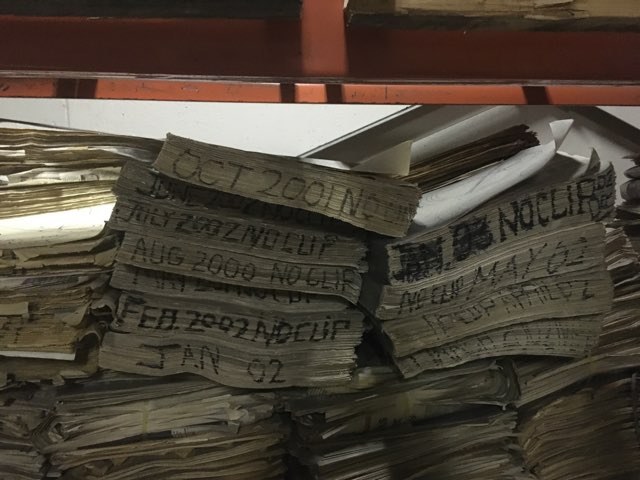
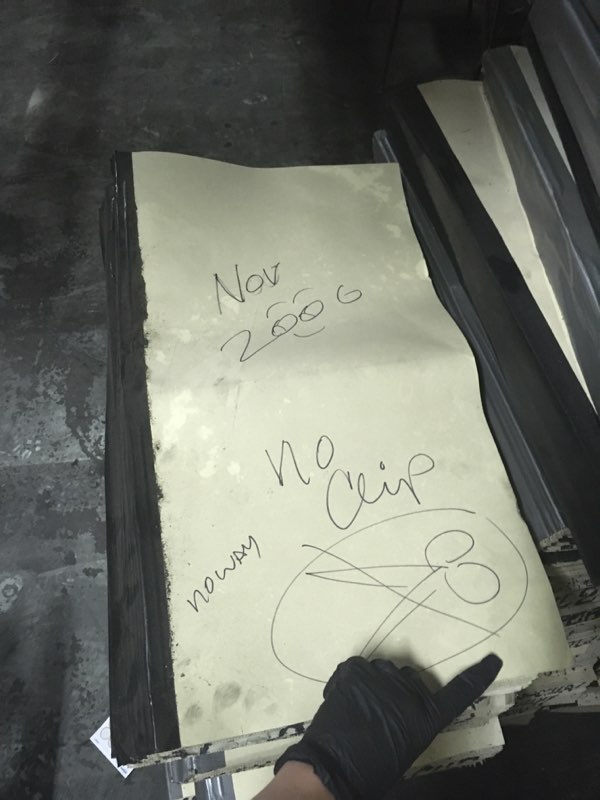
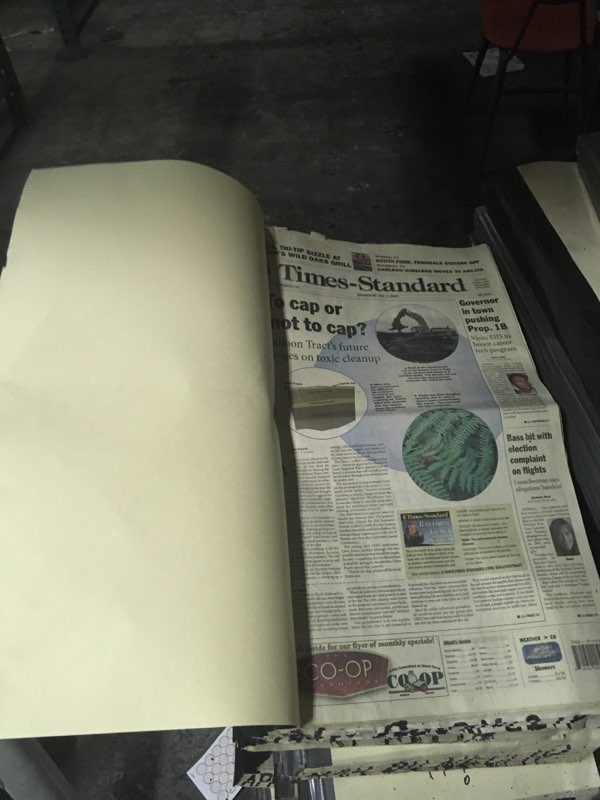
I visited the archive the following day to size up the challenge. Check out the video above- the boxes were documents that the company had to have shredded due to confidential employment information so we didn't take those. You can see the large books- those each contain a month's worth of newspapers.
 |  |
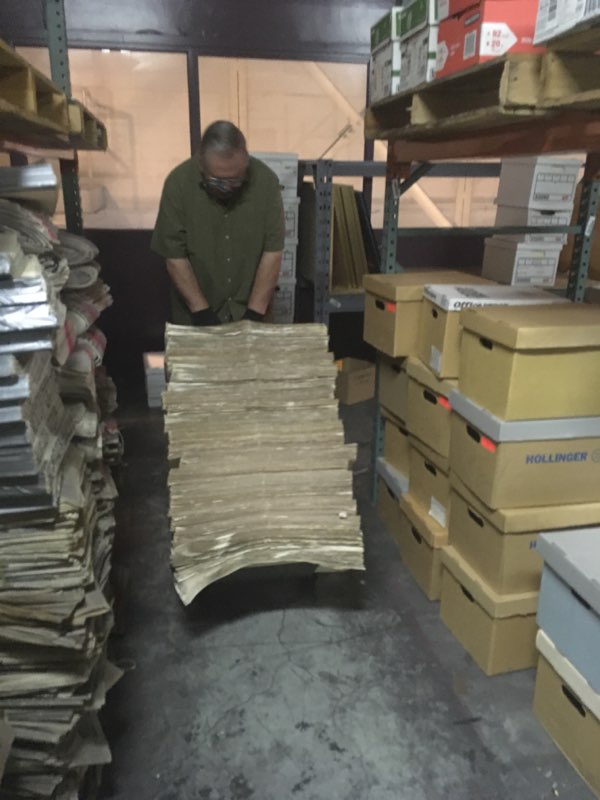
Milt moving a whole stack of newspaper books on a cart. The boxes on the right are soon to be full of the newspapers you can see on the left.
I measured how much material there was to move: about 360 cubic feet- imagine a cubic foot as the size of a bankers box or a basketball. We had papers from the late 1980s through the early 2000s, along with bound copies of the Humboldt Beacon, a smaller paper that eventually was added into the Times- Standard from the late 1940s into the 1960s. The room was dark, and everything smelled like dust and newspaper ink. Thomas told me that the floor where the printing press was (about 20 feet below the room we were in, but could be seen through a window in the storage room) had about an inch of dust and printing ink on the ground when the presses were taken out! Some of the papers were bound in books, each book containing one month and usually a funny doodle on the cover, while others were rubber banded or tied together. One whole section had fallen over and from the dust on it, looked like it had been there for a while.
By the end of that day, we had a location figured out, and a few volunteers who would be meeting at the building the following day at noon. I had no idea how we would be able to move everything out in a day.
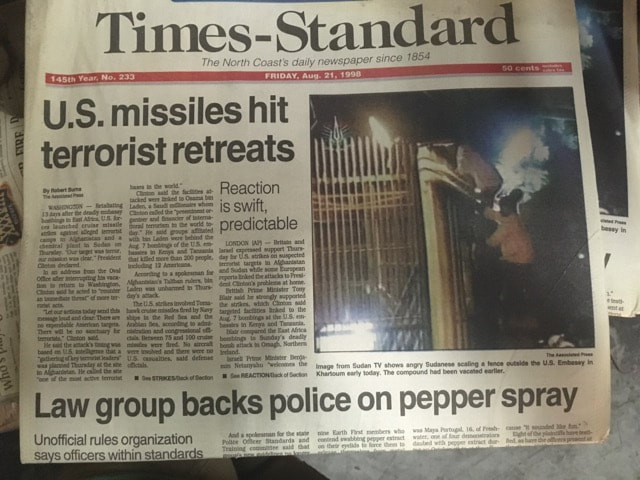 | It was long and dirty work in the process of saving the newspapers. We spent 4 1/2 hours that Friday moving books, boxing up papers, and trying not to read all the interesting articles. Thomas had been notified that we had until probably the end of the following week to have everything out, so our schedule was thankfully relaxed a bit. He had also offered to help with the process with a trailer and his truck to haul the papers the 2 blocks to the Historical Society where they would be stored. |
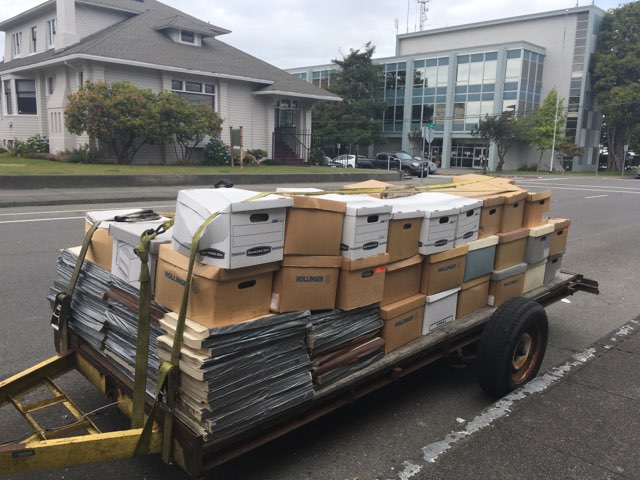
Trailer load # 2 on day one.
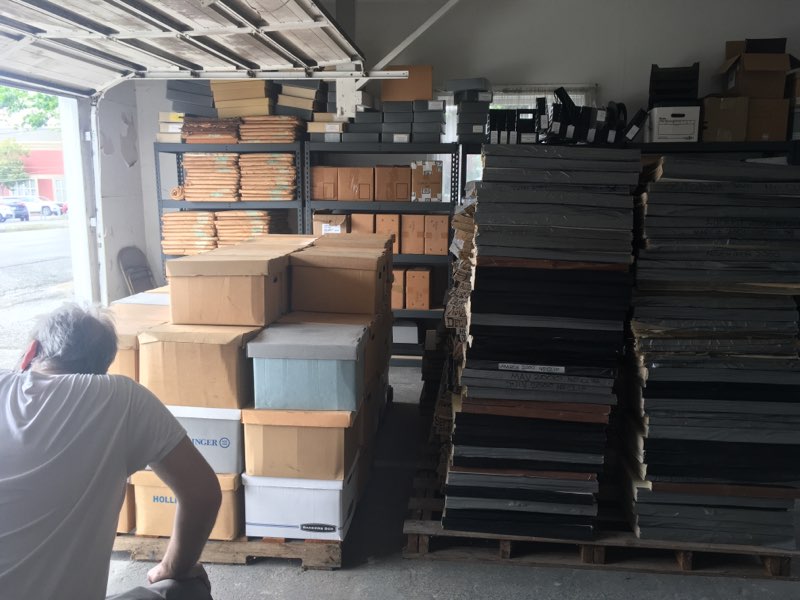
Jim sitting next to two of the pallets of papers brought to the Historical Society at the end of Day 1. That stack on the right is about as tall as me- I'm 5 foot 6 ish!
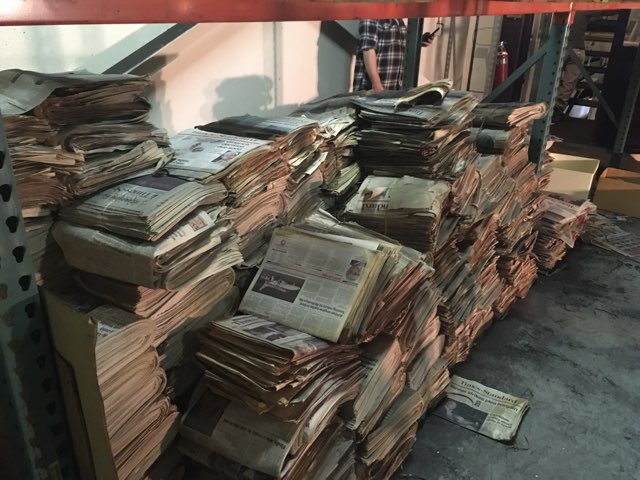 Our work was cut out for us on day 2! Here's a partial view of all the papers we had to move. | The following Monday, with a few new volunteers, we worked another 4 1/2 hours to get the last of the newspapers out. Jim had been bringing boxes from the Historical Society, and had to have brought over 60 or so boxes, if not more. By the mid afternoon on Monday thought, we had ran out of boxes to put the loose papers in, so we has to use box lids and twine to tie the papers together. Then the twine ran out. |
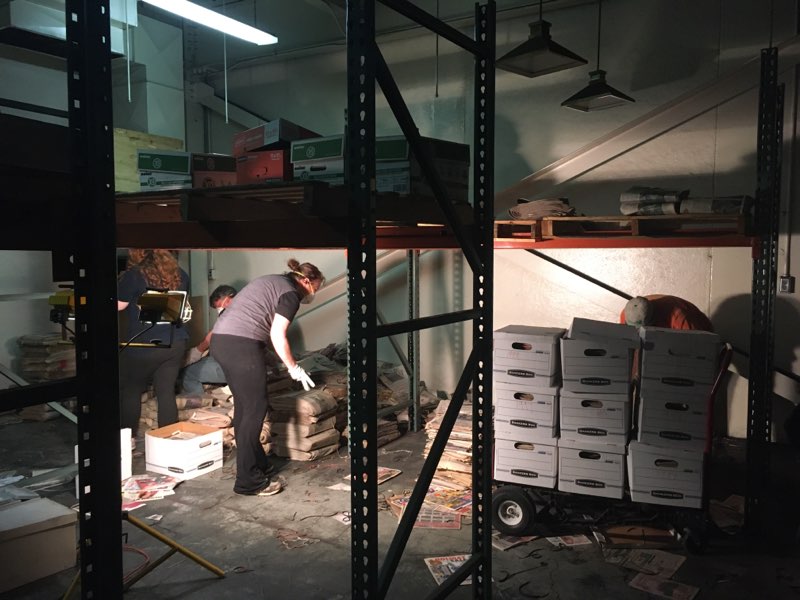 Halfway through day 2! | 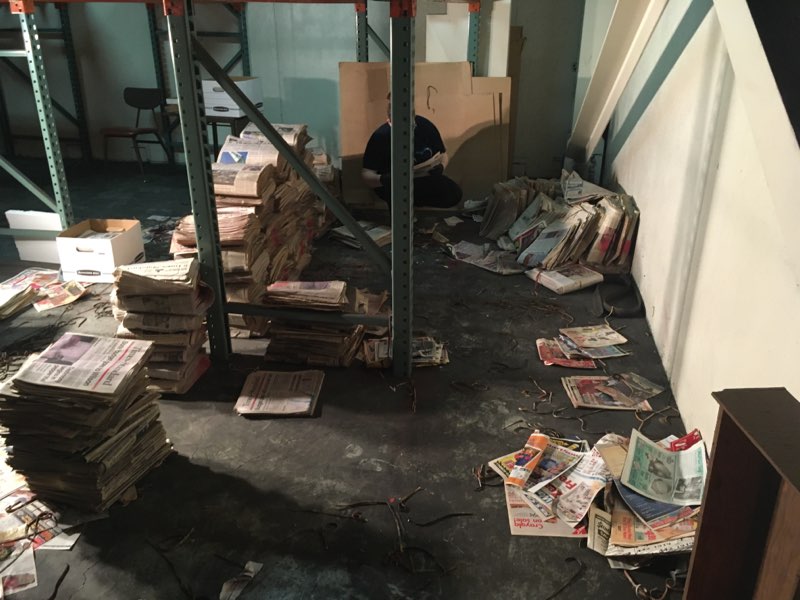 Almost there... |
In the end, all the papers made it over to the Historical Society to be processed. Duplicate papers will be removed and the collection will eventually be scanned and down the road made available to the public- although that is going to take a while due to the logistics of processing such a large collection.
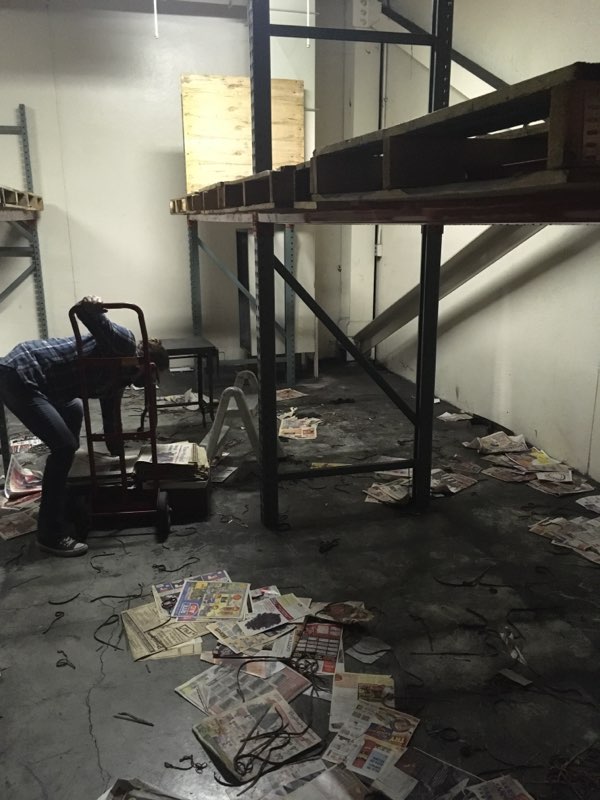
End of day 2, last box being loaded up on the cart! Check out all the old gross rubber bands on the ground - an archivist's worst nightmare!
As a curator from a sister institution, I was happy to pitch in on helping with this project, as it'll benefit all of our organizations to have good and locally accessible documentation of events over the course of our region's history. This is only the beginning for the project. I look forward to seeing what comes of it in the future.
Thank you to everyone who helped out, including Jim and his family, Thomas, Milt, Dana and David, Kurt, and Corey.
 RSS Feed