|
This week, we'll be hearing from Nealis Hall Curator and Registrar Brittany Britton on a dress being loaned to the museum for our display on women's ceremonial dresses. Leona Wilkinson and Cheryl Seidner, Wiyot tribal members, and participants in the Wiyot Women's Group who assisted in making the Wiyot dress dropping off the loan. As a part of the Women’s Ceremonial Dresses: Long Ago to Today, our goal was to ground the exhibit with the historic dresses from the collection ranging from the late 1800’s to the 1960s, and cycle through a rotating selection of community loans of contemporary counterparts. This tradition of making and ceremony is an unbroken path of resilience and adaptation to new materials and ways of making. For the newest dress loaned to the museum we are pleased to have on display a dress made by and for the Wiyot tribe in 2006. This dress was made over the course of two years from 2004 to 2006 for Michelle Hernandez, a Wiyot Tribal member, as a part of a journey for the Wiyot Tribe of seeking, finding and completing a coming of age ceremony that hadn’t been done in decades. This dress is a small part of that ceremony and journey; it was lovingly made by community members and Michelle’s family for her coming of age ceremony. The Wiyot Tribe generously loaned this dress for the spring for this Women’s Ceremonial Dress exhibit. This dress is a connecting point of a revival of ceremony, of making and coming together as a tribal community. The dress here more than a finished project, it is made of deerskin, shells, beads and represents hours of prayer and artistry. The Wiyot Tribe's dress on display at the Clarke Museum "Upon moving to the Table Bluff Rancheria from Sacramento Valley, Michelle Hernandez asked a simple question: How did the tribe celebrate a girl’s passage into womanhood? The answer to that question began the quest to bring back traditional practices. Recreating a ceremony that hadn’t been celebrated in over 150 years required many people, many hours of research and work, and the long term commitment of tribal participants. The Wiyot Women’s group created the dance dress, and the Wiyot men’s camp learned songs and dances that haven’t been performed in over a century. Other local tribes also brought skills and knowledge to the ceremony. Many helped in the process – local artist and Karuk/Yurok/Hupa tribal member Lyn Risling brought her personal research and experience to the ceremony; the Bureau of Land Management provided access to the south spit site; the Hernandez family learned the strict protocols to follow; tribal staff spent hours removing invasive vegetation to create the dance area." (From Rebirth Into Womanhood: A Coming of Age Journey, presentation by Wiyot Tribe) The materials are more on the traditional side being made of deerskin, clamshells, pinenuts, abalone, Beargrass wrappings and minimal glass beads. The materials and design of the dress is from the Wiyot Women’s group that assisted Michelle and her family in creating this dress alongside a bark skirt that was worn for the coming of age ceremony. The dress was ultimately donated to the Wiyot Tribe for safekeeping and so it would be danced again.
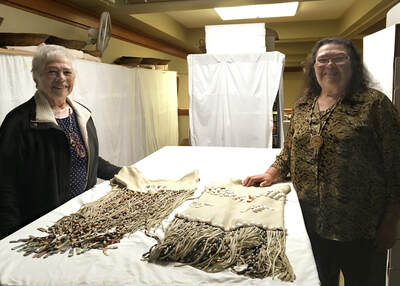
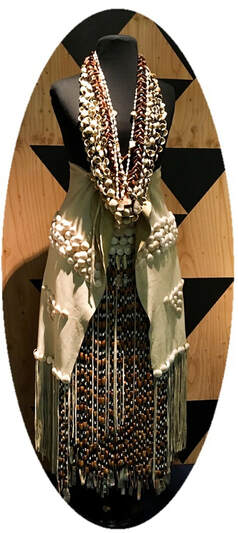
Come visit the Clarke Historical Museum to see this dress in person, and the narrative of the story of this dress as representation of the continuing journey for ceremony for the Wiyot Tribe.
6 Comments
The Clarke has around 10,000 photos in the collections, which is about 17% of the total collection. The photos span from the earliest days of the county to the present and include a wide variety of subjects. They're some of my favorite items to work with because they can tell so many stories and illustrate change in the community- and the sometimes surprising continuity over time. This month, we'll be taking a closer look at our photo collection-what's in it? What does it look like? We'll also be checking out ongoing work happening with the collections including our scanning project and research being done by members of the community to better understand one of the photographers who appears in our collection. We'll also highlight a new photography exhibit opening at May's Arts Alive in the Victorian Room!
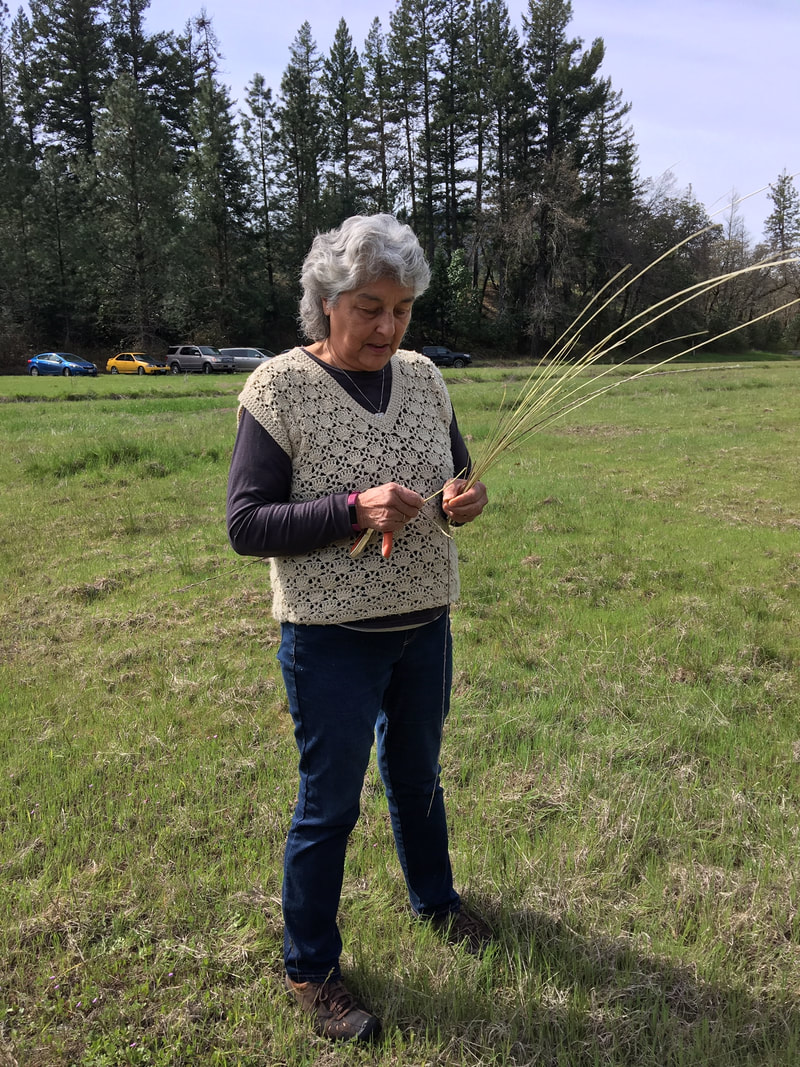
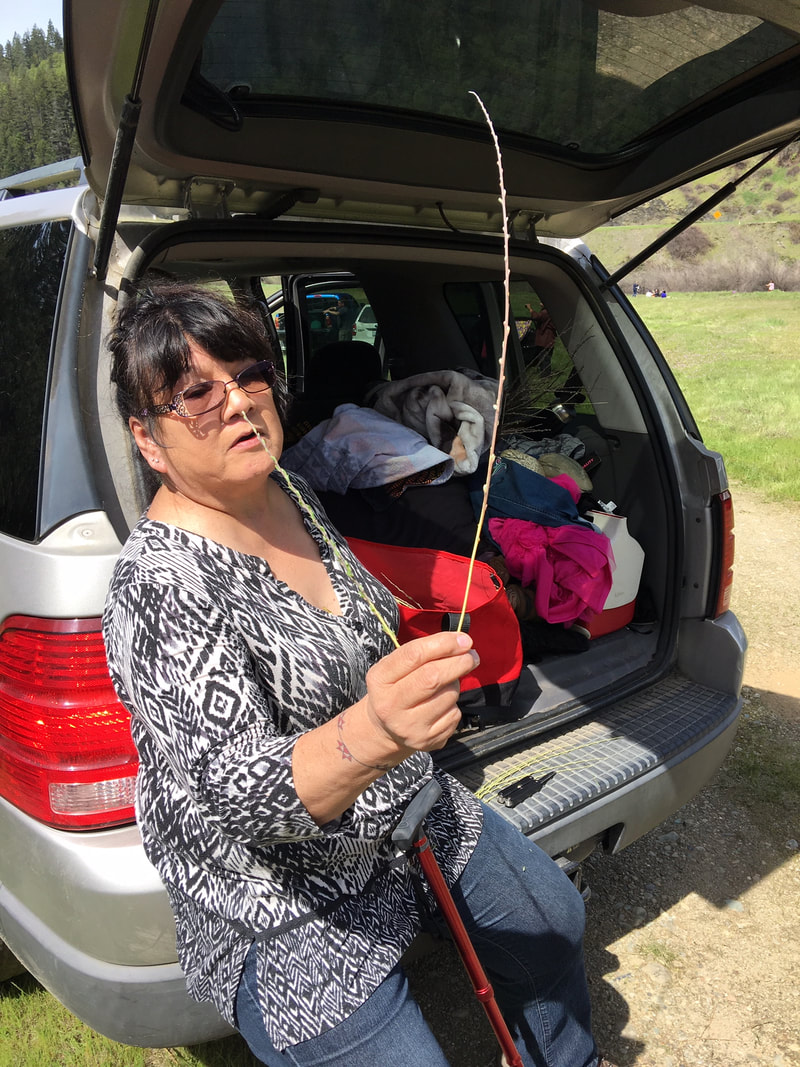
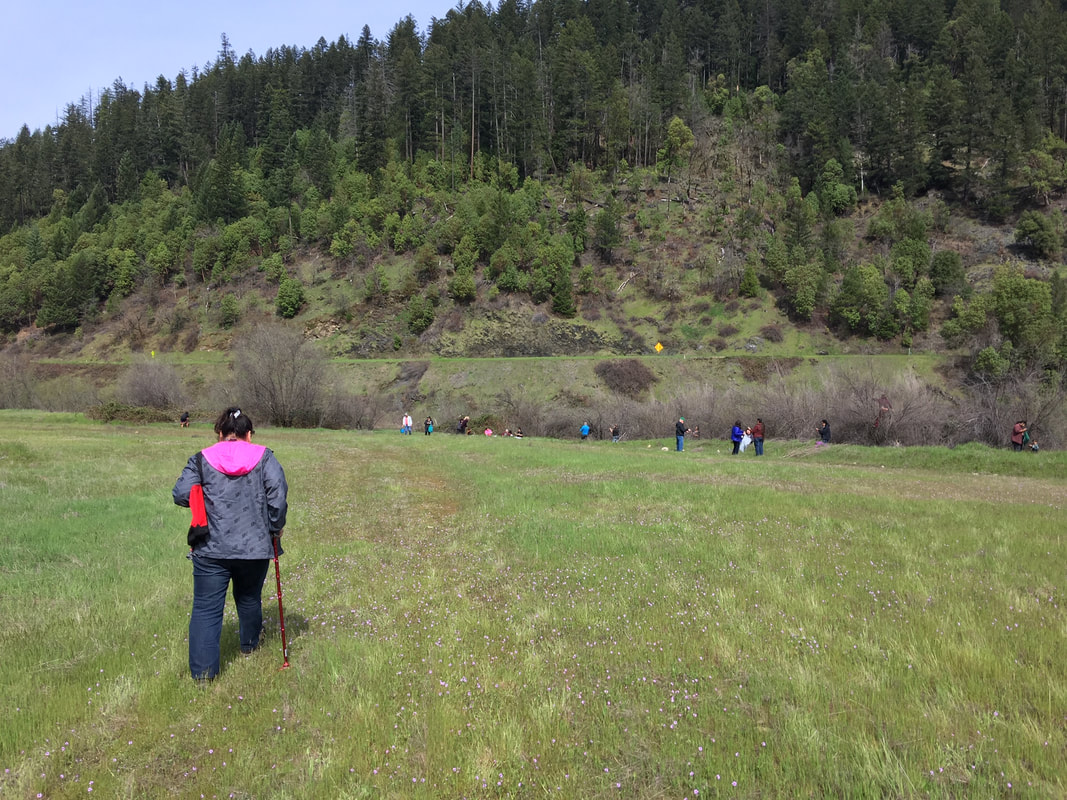
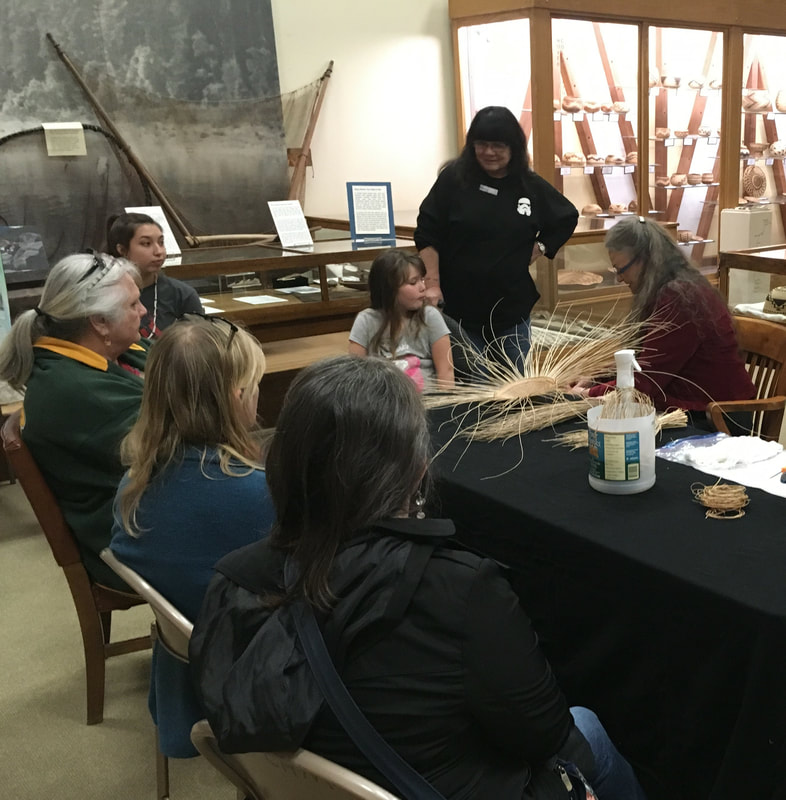
This week, we hear from the Clarke's Education and Interpretation Committee that attended the yearly Basket Weaver's gathering in Happy Camp. The trip was part of a series of trips the committee is making to reach out and connect with tribes and communities that are stakeholders in the work being done at the Clarke. We were able to meet with members of the Karuk Tribe’s People’s Center Advisory Committee. The People’s Center is the Tribal museum and Gift shop. We were able to make inroads on cultural exchange ideas such as exchanging exhibit pieces (as permitted by our policies) and sharing photos and documents from a digital perspective in cases where original pieces cannot travel. We also discussed their digital library and the possibility of digitizing videos, CDs, etc. through cooperation with the Karuk Tribe. We look forward to collaborating with our tribal partners. At registration, we had some time to talk with Denna Dodds whose basketry work is currently on display at the Clarke. The weekend’s festivities then began with an opening prayer before a potluck dinner. It was sung beautifully by Jamie Peters, a Karuk tribal member. Dinner was followed by a night of Bingo fun, then everyone headed to their accommodations to rest up for Saturday.
Once you have the sticks you need, it’s time to peel them. Small sticks just beginning to bud are easier. Some have already begun to leaf out; those are more difficult to peel the bark from and may require smoothing with a tool or thumbnail. If you can’t peel them right away, the stick should have their base in a few inches of water until you can get to them. Once the peeled sticks dry out, they can be stored for later use. We had a great learning experience to share with visitors to the Clarke, and we made some new friends along the way. Thank you to Lynn Sturgis for writing this article, and Shirley Laos and Dina Fernandez for editing. Photos by Lynn Sturgis.
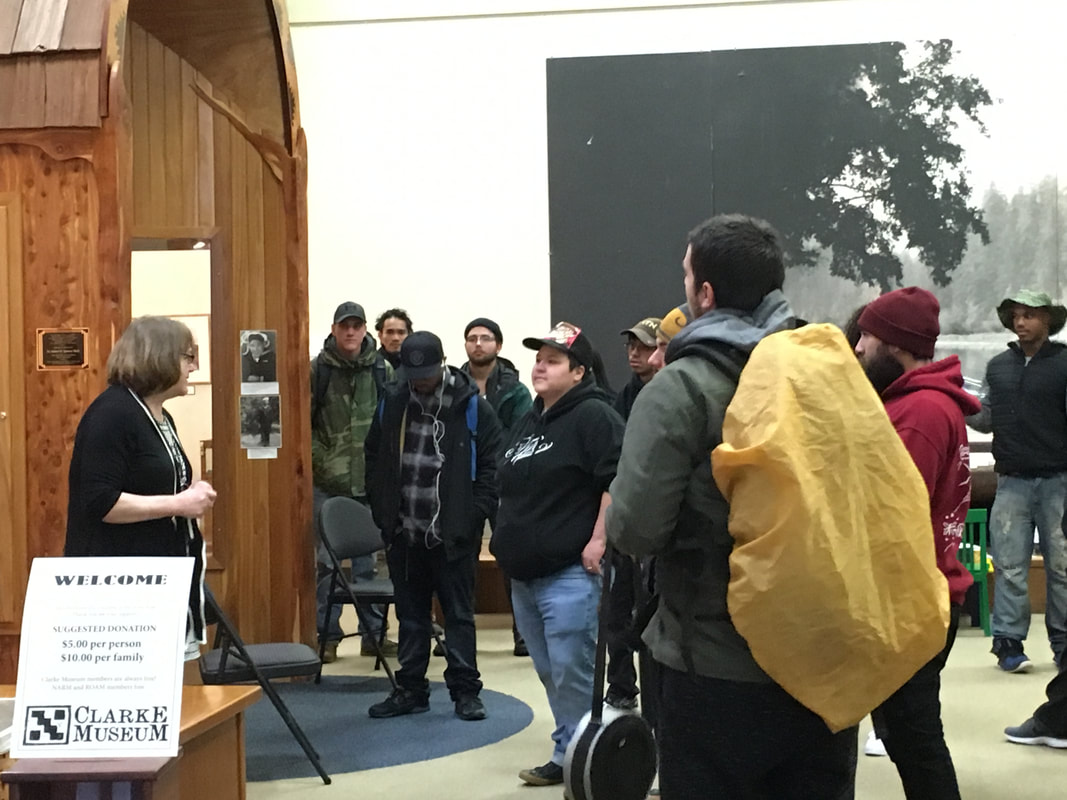
“Volunteering is the ultimate exercise in democracy. You vote in elections once a year, but when you volunteer, you vote every day about the kind of community you want to live in.” — UnknownVolunteers play a huge role in day-to day museum operations and are very important to the long term operation of the Museum. In celebration of April as National Volunteer Month, I'd highlight some of our fabulous volunteers and the work they do here. Docents
Tour Guides
Interns
Collections Volunteers
How did our volunteers get their start here?Shirley Laos
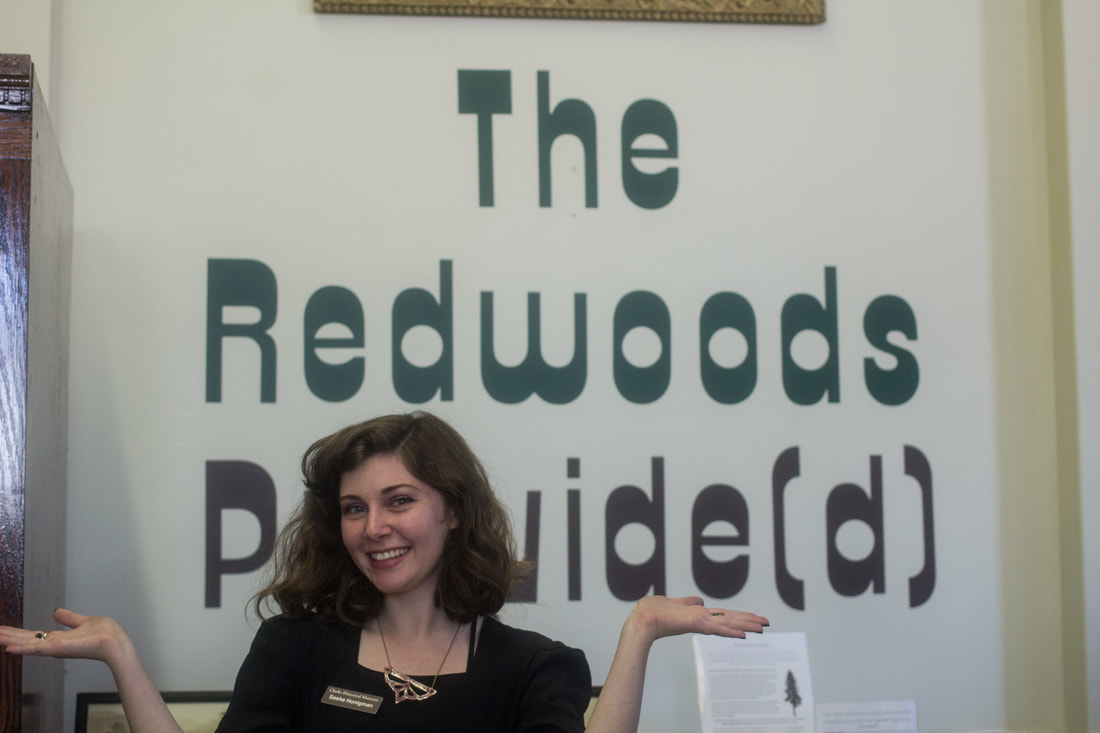
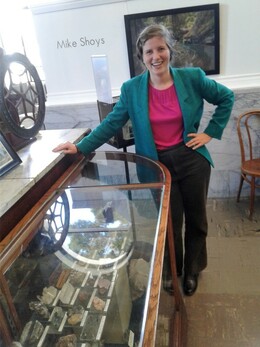
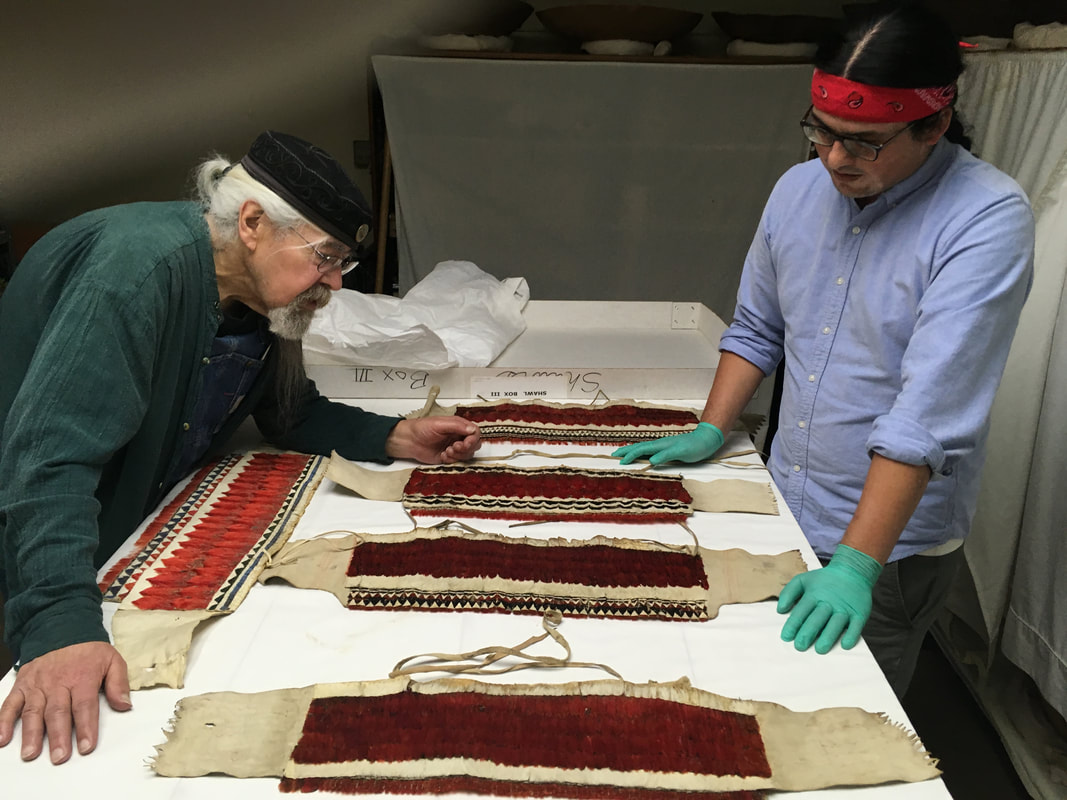
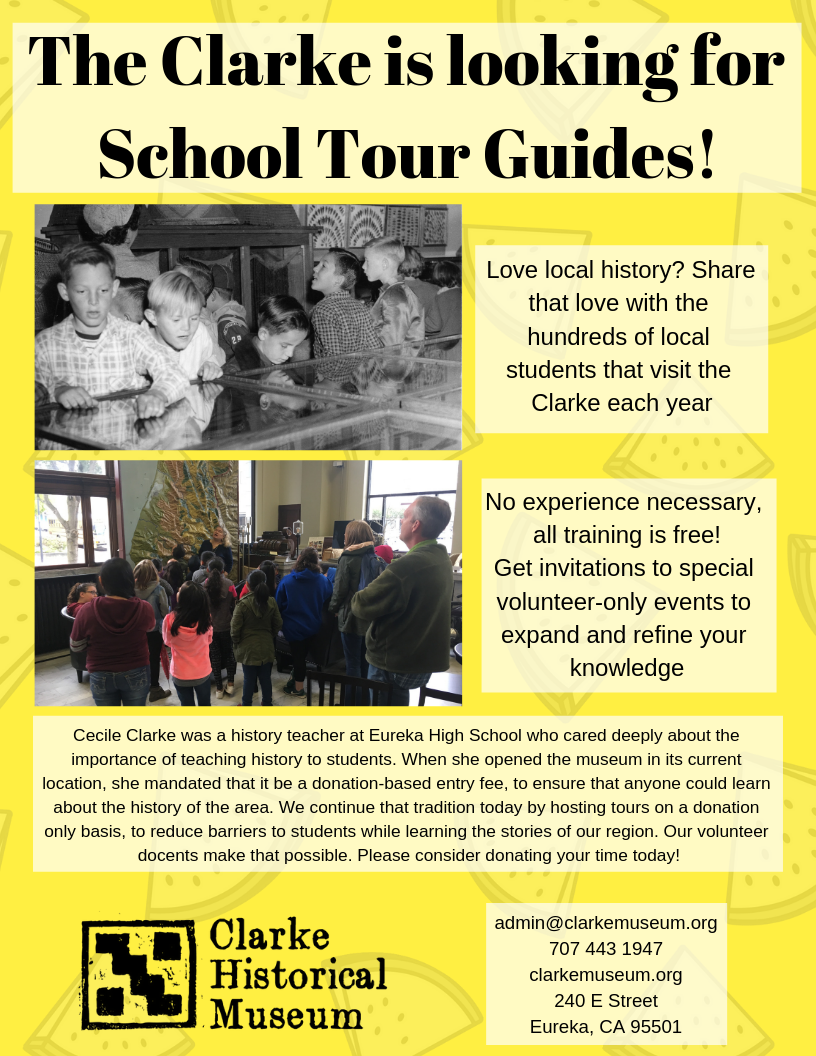
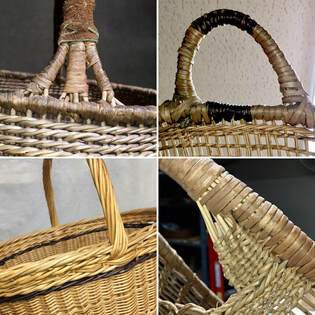
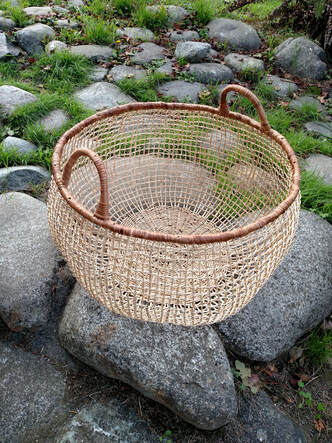
Kelly Fortner: Volunteering at the Clarke in her own words I began volunteering at the Clarke Historical Museum in July of 2018 and I have been working on a project to catalog and relabel the museum’s rock and mineral collection. I found out about the opportunity during the opening of The Redwoods Provide(d) exhibit and through Katie Buesch, who is the Registrar-Curator for the Main Hall Collections. I also know Katie through the Religious Studies major at HSU—she is a wonderful volunteer supervisor and friend! This has been my first experience volunteering in a museum setting and I absolutely love it! The staff and other volunteers at the museum are super kind and welcoming and it is really interesting to learn a bit about the museum’s collections and about some of the local area’s history. Also, working with the rocks and minerals provides an experience that is special to me, because I also majored in Geology at HSU and I feel that there is so much we can learn through studying rocks. Rocks carry with them a story that tells of their journey from their formation to how they traveled to the surface of the Earth and into our hands. And through the study of rocks (petrology), I have learned a bit about how to interpret and convey these stories. From my perspective, I would say that stories are inherent to the way that we, as humans, understand and interact with the world. I think it is incredibly valuable to have a place like the Clarke Historical Museum in our area to facilitate the sharing of various stories from the past and I feel lucky to have the opportunity to volunteer there! Volunteering at the museum is a great way to gain new skills, give back to the community, learn more about our area's fascinating history, and meet other people interested in similar activities. Right now, we are most in need of additional tour guides to help with upcoming school tours. See the flyer below and feel free to contact us if you are interested in training.Never worked in a museum before? No need to fear-we offer all initial volunteer training and ongoing training for free. Join our newsletter to hear about upcoming training opportunities or become a member to help support our volunteer program! You can also visit our Volunteer page to learn more. Twined utility basket, unknown Hupa weaver, early 1900's, Clarke Collection. The Native American collections at the Clarke are more than a beautiful collection to view while visiting. We have hosted weavers and regalia makers over the years to go through the collections to gain insight on ways of making and inspiration for the creation or repair of newer basketry and regalia items. Denna Dodds, a Karuk tribal member and 2014 & 2017 recipient of the Victor Thomas Jacoby Award, visited the Clarke Collections in the Fall of 2018 to assist with finishing a large open weave utility basket with handles.
Denna Dodds and Theresa Surbaugh will be doing a weaving demonstration and answering questions all through Arts Alive. Come join us Saturday April 6th 6pm-9pm at the Clarke!
|
AboutKeep up with the Clarke through our Blog! Archives
August 2022
|
|
240 E Street
Eureka, California 95501 [email protected] (707) 443-1947 |
Open Wednesday - Sunday
11 a.m. to 5 p.m. Closed Monday and Tuesday Open until 8:30 p.m. during Friday Night Markets Open until 9 p.m. during Eureka Arts Alive |