|
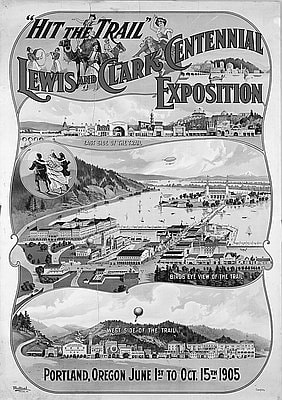
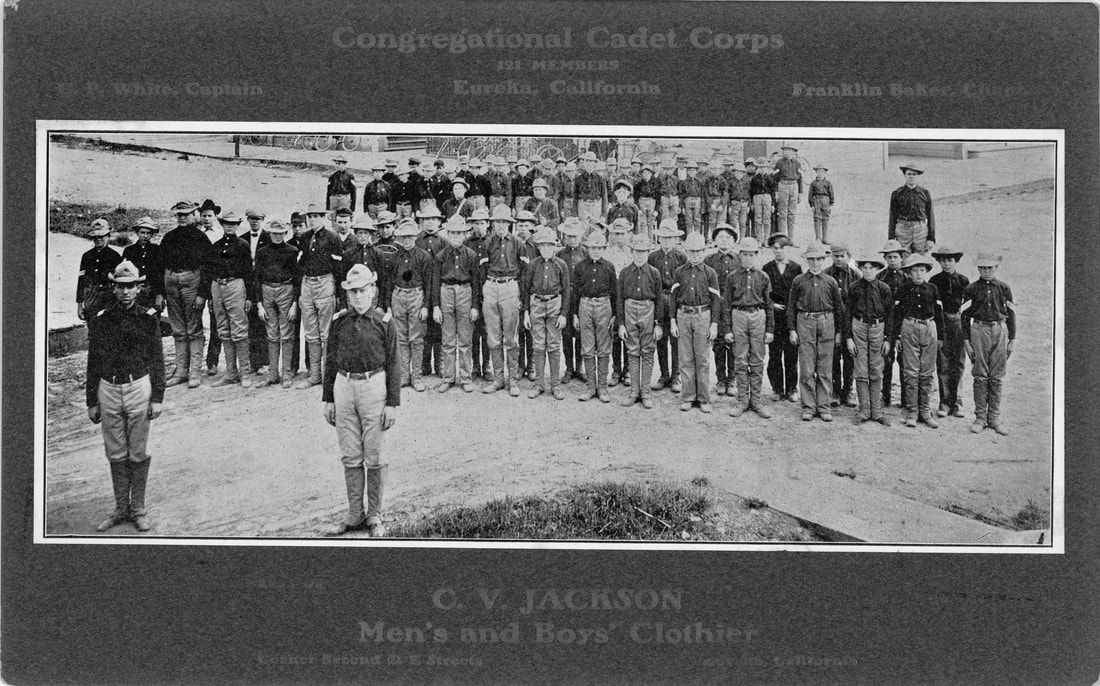
A few months ago, the museum received an incredible banner to add to the collection from a collector in Portland, OR. With a bit of research, it turned out that this banner had an even more amazing tale to tell, one that connected Portland and Eureka back in the early 1900s. What was the Congregational Cadet Corps?The Congregational Cadet Corps was a boy's group affiliated with the Congregational Church, a reformed Protestant church located in Eureka. At one point in time, as noted in the photo below c. 1900, the group had 121 members. The group was led by Reverend Franklin Baker who was assisted by C.P White. An additional leader included a man known as Mr. Emery who was an officer in the Spanish-American War. What was the Lewis and Clark Centennial Exposition?The year 1905 happened to be the 100th anniversary of the Lewis and Clark expedition, which had passed through the area that would later become Portland. In celebration, the City of Portland hosted an Exposition, which, as mentioned in this post a few weeks ago, would typically be held to promote tourism to an area for an extended period of time.
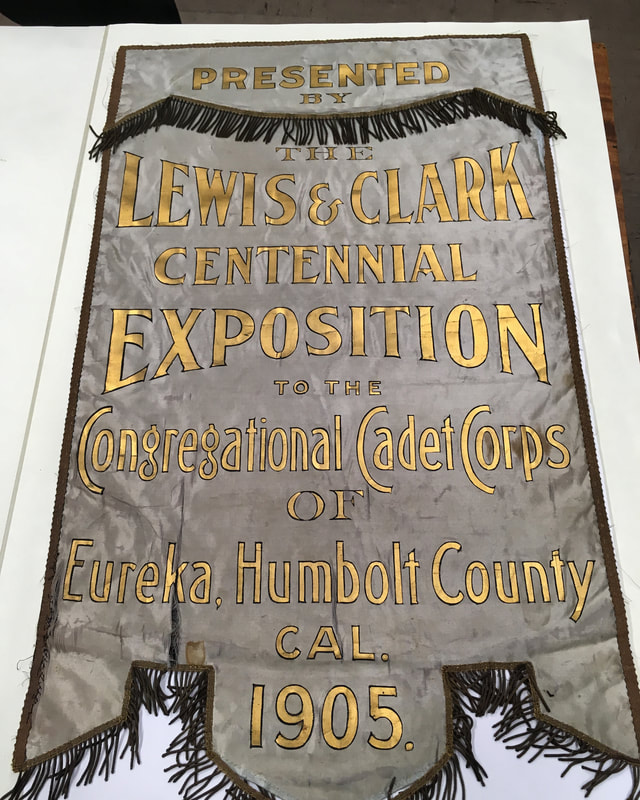
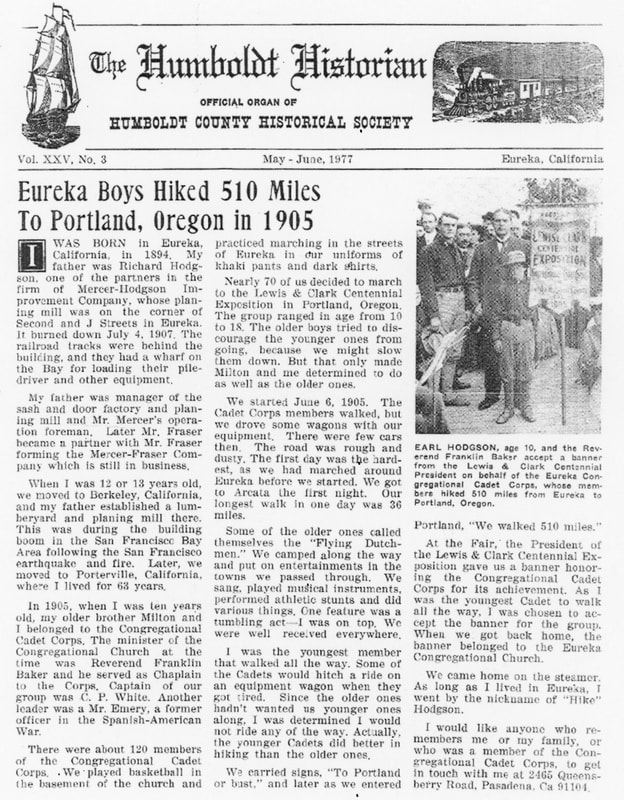
While at the Exposition, the President of the Exposition awarded the Congregational Cadet Corps with the banner that has now made its way back to Humboldt County, 103 years later. The youngest member of the group, Earl Hodgeson, wrote an article for the Humboldt Historian in 1977, which you can read below:
3 Comments
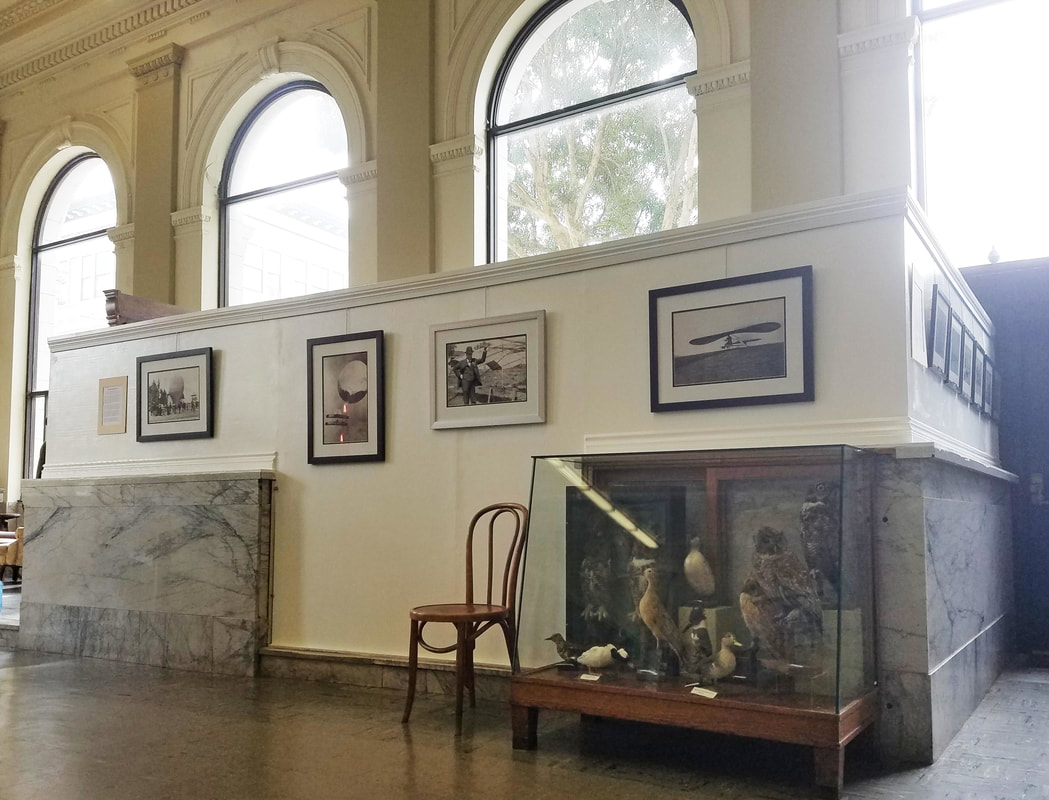
The Clarke has just installed a new exhibit space! We are inviting local artists who are museum members to use this space to show their artwork! We've got a few exhibits scheduled; Kathrin Burleson is installing a new exhibit in time for April's Arts Alive; Mark Alder and David Jernigan are also scheduled for this summer. There's plenty of space in the schedule for more, however; email us at [email protected] to apply.
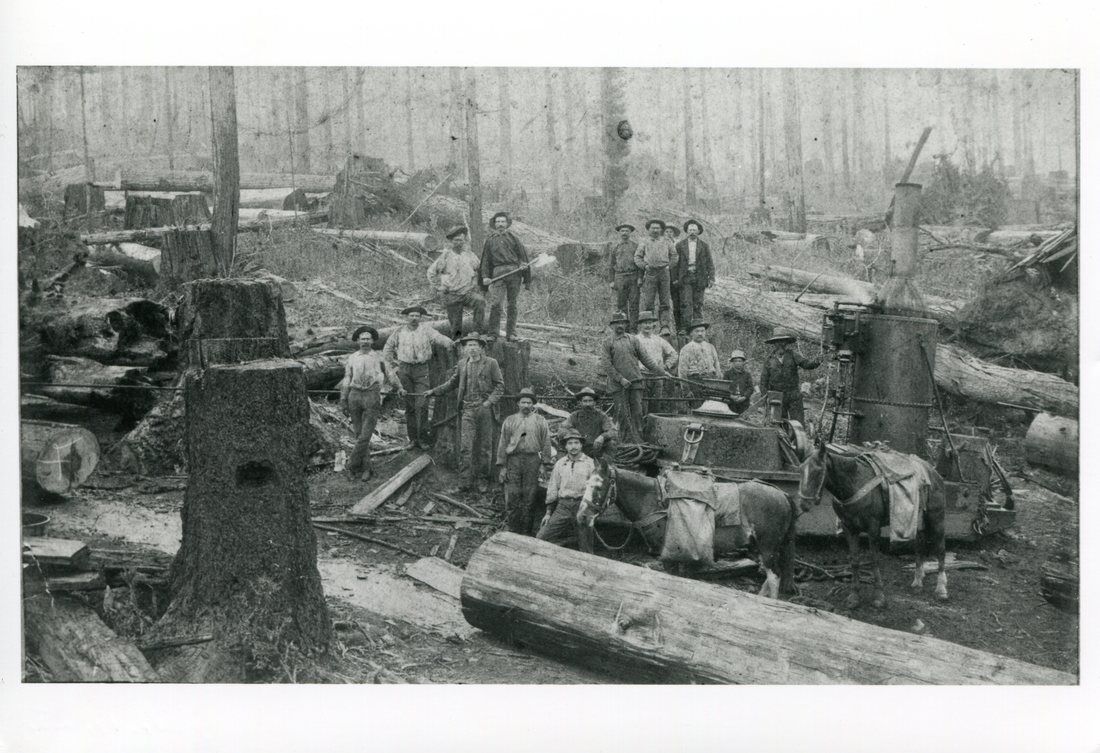
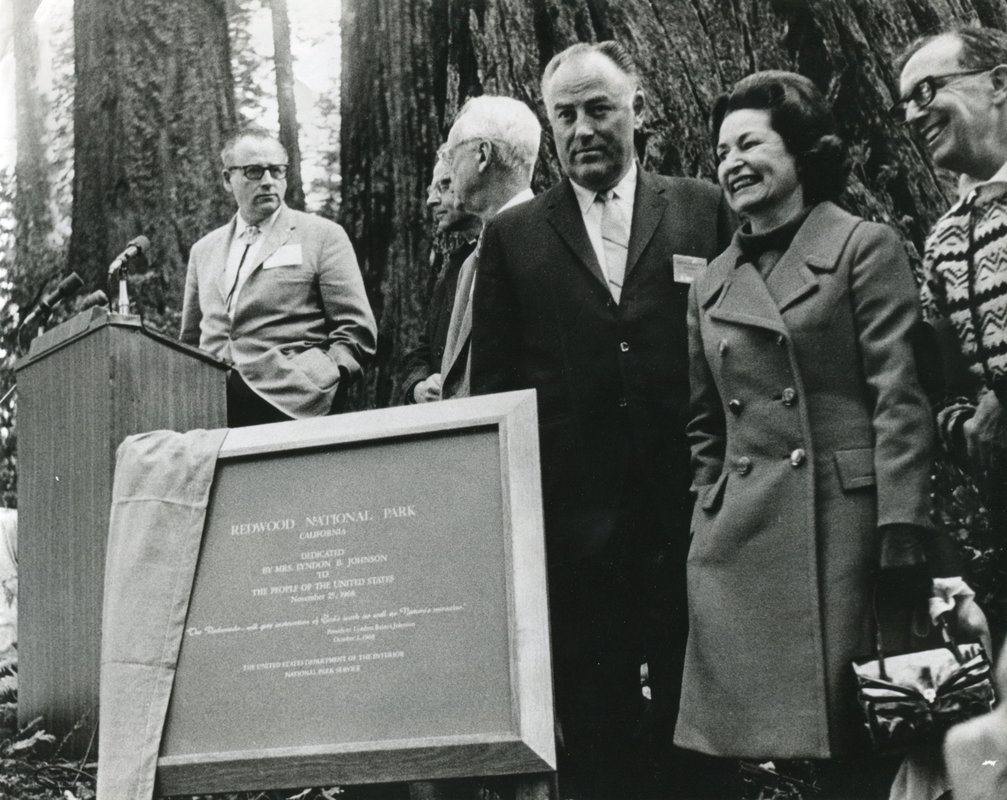
Early loggers with a steam donkey in a clearcut area. Our upcoming exhibit, which will be opening at July's Arts Alive (July 7) is called The Redwoods Provide(d): A History of Redwood National and State Parks. The exhibit will be covering a brief history of how people have interacted with the region, both sides of the controversy over the park establishment, and the effects of the park on Humboldt County. If you have items that you think may contribute to the story of the Parks and could be loaned to the museum for the duration of the exhibit, email Katie at [email protected] with information on what the item is and how it relates to the history of the park. This exhibit is part of a larger collection of events and exhibits taking place throughout Humboldt and Del Norte Counties to commemorate the 50th anniversary of the Parks establishment and the 100th anniversary of the founding of Save the Redwoods League. The Redwood Festival of Arts and Culture will be happening throughout 2018 and is being facilitated by the Redwood Parks Conservancy. Do you have stories about the establishment of Redwood National and State Parks? Share them in the comments!In February, we had a community member come by with a few old cameras that she wanted to donate to the museum. They were owned by relatives, Jay and Wilde Grunert of Fortuna, who owned a hunting store in Fortuna for many years. The donor found the cameras while cleaning out a house and decided to donate them to the Museum. You can see images of the cameras below. The Clarke Museum is largely a volunteer-operated museum that needs YOUR help! Whether that is through a membership or through donating some of your time, any help is much appreciated.
Our goal is to provide volunteers with the opportunity to pursue their interests in a museum setting, learn something new, and have fun in the process. We have a variety of ongoing projects from working with the collection to working with the public and everything in between. We are flexible and want to help you find the project that is just right for you! Our volunteers do a variety of things in our museum, including:
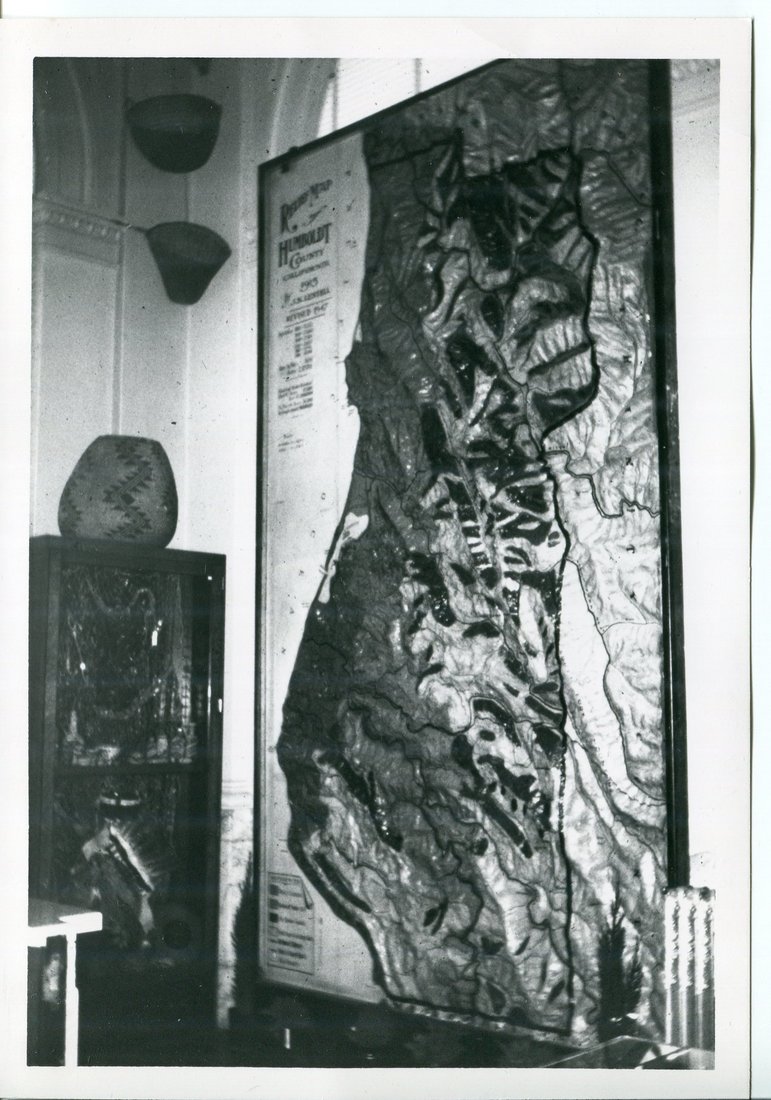
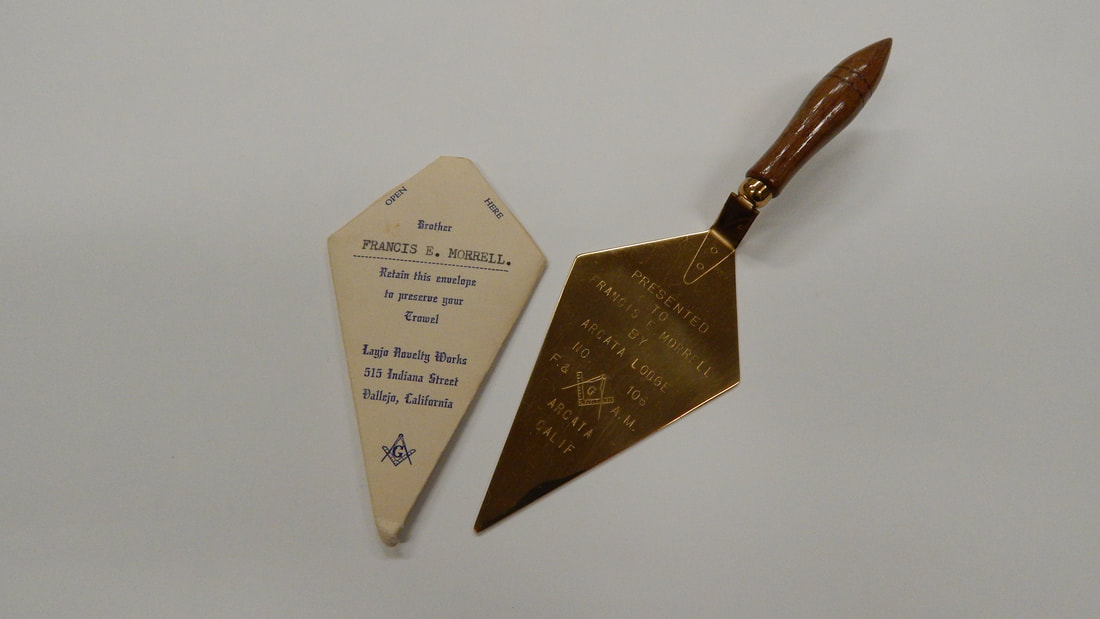
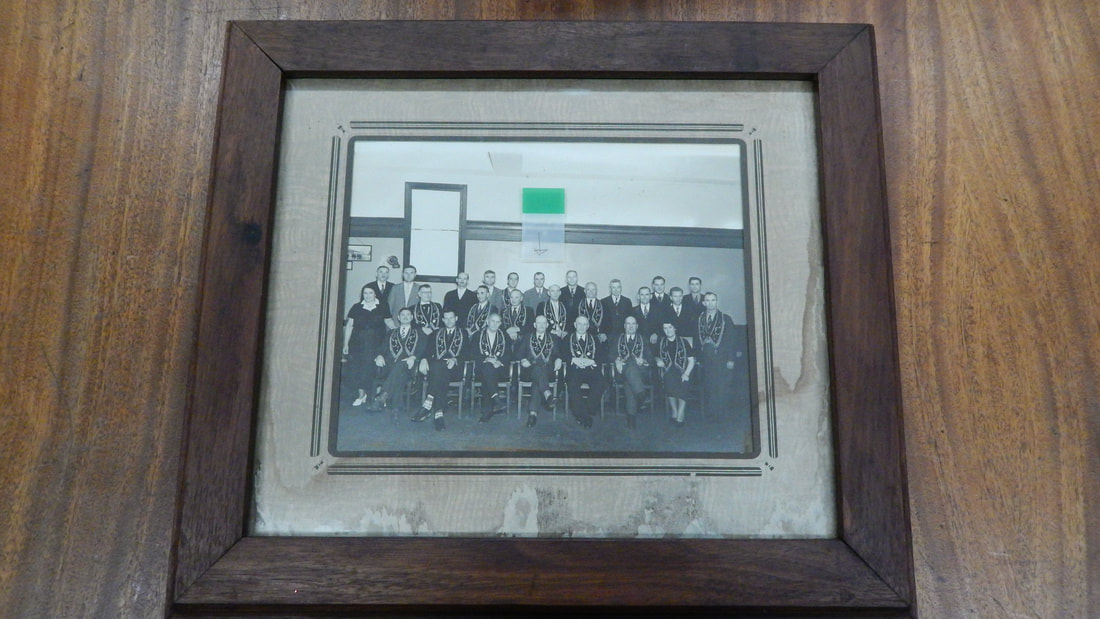
Humboldt County and the Panama Pacific International ExpositionIn 1915, San Francisco welcomed the world to the Panama Pacific International Exposition. The 600-acre fair was intended to celebrate the opening of the Panama Canal, with a side goal of showing off San Francisco’s earthquake recovery. Expositions like these brought together people from around the country to see a variety of exhibits ranging from cultural to artistic to scientific and promoted technological development. On May 24, 1914, the Exposition welcomed 500 Humboldt County residents who had made the trip to San Francsico with a Humboldt County Day, pictured above. Besides having its very own day, Humboldt County had its own exhibit at the Exposition. The exhibit was housed in a 20-foot-tall by 20 feet long log and stump house, which you can see part of in the photo below. The redwood building held redwood artwork, examples of local industry, and the Lentell Map. The building was used to promote tourism to Humboldt County ahead of the completion of the Northwestern Pacific Railroad which connected Humboldt to San Francisco at the end of 1914. Help Restore the Lentell Map!After years of being on display, the Lentell map is in need of restoration. It will cost $1,100 for professional conservators to restore the map to its original glory. Even the smallest donation will help us care for this fascinating piece of local history. Interested in donating to the cause? Call the museum at 707 443 1947 or email Katie at [email protected] . Share your photos or stories about the Lentell Map in the comments below!In this week's Artifact spotlight, we're featuring a new item on loan to the museum, a new discovery made about a set of photos on exhibit, and a new donation. Golden TrowelWhile not made of real gold, this trowel, on loan from longtime museum supporter Leon Warmuth, sure shines like it is. The inscription on the trowel reads "Presented to Francis E Morrell by Arcata Lodge No 106 F&AM Arcata Calif." The Trowel has been placed on display in the Freemasonry section of the Fraternal Organizations of Humboldt County Exhibit, which will be on display until the summertime. Weeott Tribe Gathering in Scotia PhotoThese photos, on loan from the Humboldt County Historical Society, feature a gathering of people in Scotia, c 1920. When the photo was first brought to the museum to be put on exhibit, we didn't know much about the situation that called for such a gathering and impressive redwood-stage construction. The mystery, however, has been solved. The photos feature members of the Weeott Tribe, a local chapter of the Improved Order of Red Men. The celebration is for the dedication of the newly-completed Redwood Highway going through the town of Scotia. In later years, the Redwood Highway would be known as Highway 101. The Improved Order of Red Men was incredibly popular in Humboldt County into the 1950s and 60s, with 7 chapters at its peak. You can read more about this group's history in Humboldt County here. Croatian Fraternal Union Ribbons and Founder's Photo Helen Saunders, a previous museum donor, brought by two ribbons and a group photo featuring the founders of the local chapter of the Croatian Fraternal Union. The photo includes Mrs. Saunder's father, Joseph Susich, who played a large role in the creation of the lodge and is in a custom made frame built by Mr. Susich. Mr. Susich was born in Croatia in 1895 and immigrated to Eureka in 1911 when he was 16 years old. He was able to meet up with his father, who had immigrated before him and he lived in Samoa. Like many of the Croatian immigrants to the area, he worked in the mills. While his father went back to Croatia around the beginning of the second World War, Mr. Susich stayed and was buried in the Croatian plot of the St. Bernard Cemetery, now known as the Ocean View Cemetery, in Eureka. These two ribbons, also donated by Helen Saunders, are from two separate Croatian Organizations that existed in Eureka in the early 1900s. The smaller ribbon is from the Croatian Benefit Society Heart of St. Mary while the larger ribbon is from the Croatian Benefit Society of St. Helena. The ribbons are double sided with a reversible pin top to allow the wearer to wear the colored side facing outward for club events and the black and silver side out for somber events like funerals.
The Clarke Museum is excited to showcase another group of incredible local photographers in our Opera Alley Exhibit Space: Humboldt State Professor James Woglom's Art Education Class, featuring the work of Cecily Chavira and Sam Fabian. You can see photos from the installation of the exhibit below: The Opera Alley Exhibit Space is a rotating space that gives local photographers a place to display their work for 2 months at a time. The Clarke Historical Museum is looking to expand this program to include more students. Donations to this program help reduce the cost to classes who would like to share their artwork. It costs about $250 per class to display their work in Opera Alley. This cost covers paying to print the photos and the supplies to post the images on the wall. If you would like to donate to the cause, you can donate via our website (be sure to include in 'directions to seller' that it is for the Opera Alley Exhibits) or by visiting the Museum.
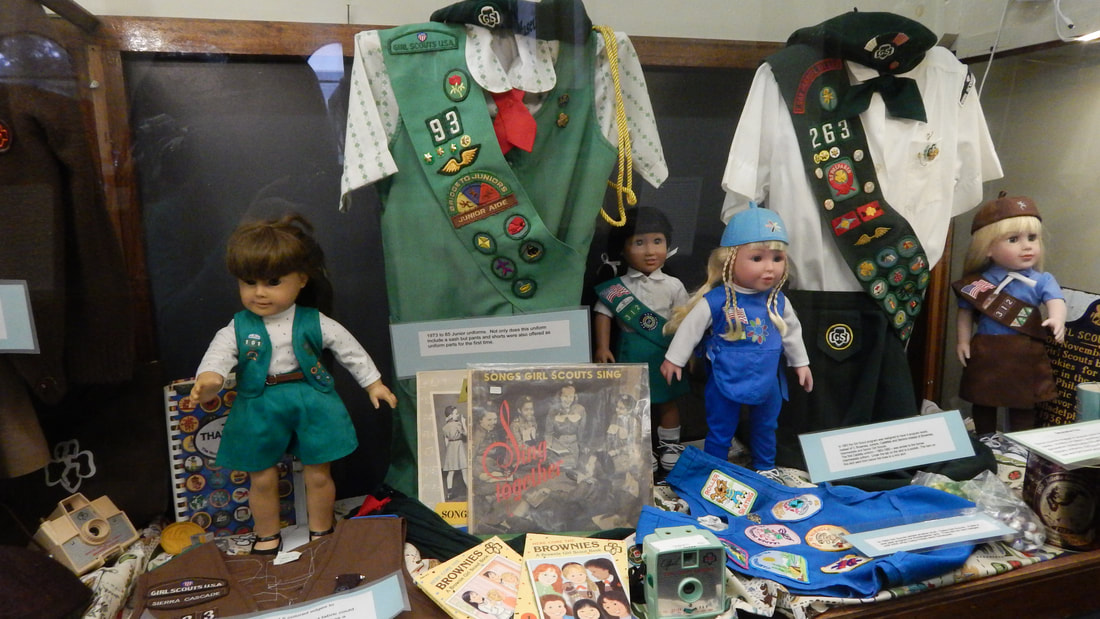
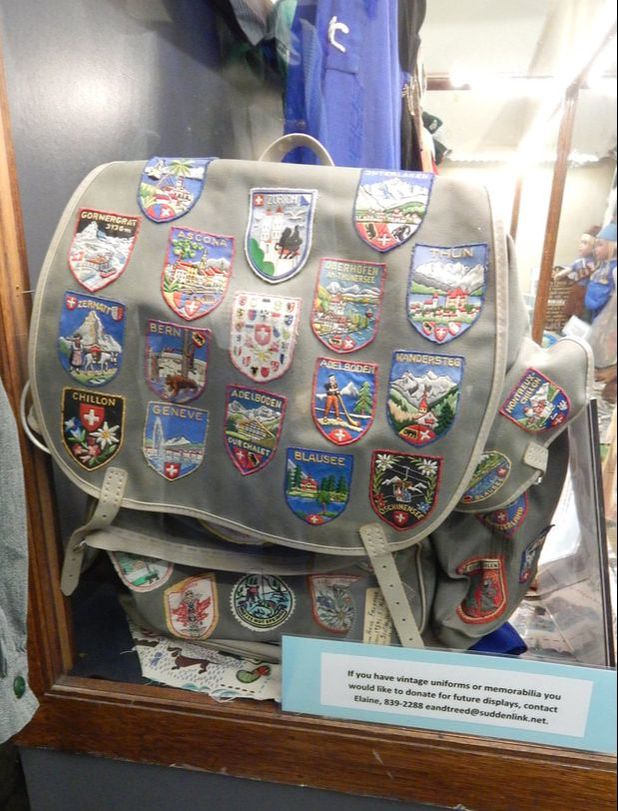
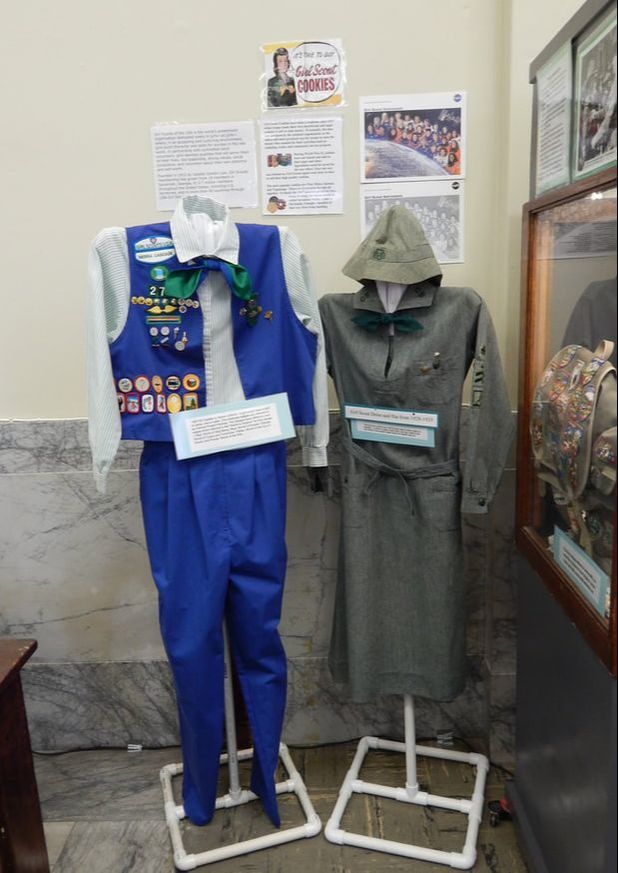
Can't make it out to the Alley to see the photos? You can also see them here. This month's Community Case features a plethora of fun and fascinating items from the Girl Scouts. The case, which debuts on Arts Alive on March 3rd, was created and installed by Elaine Reed. Elaine decided to show the collection of Girl Scout uniforms, handbooks, and memorabilia in celebration of Girl Scout Day, which takes place on March 12. The Girl Scouts of America were founded on March 12, 1912 in Savannah, Georgia by Juliette Gordon Low. In celebration of the Girl Scout Birthday, all Girl Scouts can visit the museum for free during the month of March! The case includes a variety of historical uniforms, along with information on when each uniform was used and changed over time. It also includes a variety of interesting related items, such as cameras, commemorative tins, calendars and signs. This case doesn't just look sweet-on its debut this Saturday, there will be Girl Scouts from a local Eureka troop selling cookies at the Museum, so stop by and get your box before they're gone.! Are you a local Girl Scout? Share your memories in the comments! And don't forget to stop by the Museum to see the exhibit! |
AboutKeep up with the Clarke through our Blog! Archives
August 2022
|
|
240 E Street
Eureka, California 95501 [email protected] (707) 443-1947 |
Open Wednesday - Sunday
11 a.m. to 5 p.m. Closed Monday and Tuesday Open until 8:30 p.m. during Friday Night Markets Open until 9 p.m. during Eureka Arts Alive |