CLARKE HISTORICAL MUSEUM
  • Home
    • Land Acknowledgement
    • How to find us
  • About the Clarke
    • Annual Report 2023
    • Staff & Board
  • Exhibits
    • Native Plant Garden
    • Main Hall >
      • Touring Humboldt: The Golden Age of the Redwood Highway
      • Pin Contest 2026
      • Emmerson Room >
        • Floriography: The Secret Language of Victorians
        • The Carolyn Burns Foundation
      • Historic Firearms
      • Clarke Bird Collection
      • Clarke Gem & Mineral Collection
    • Nealis Hall >
      • About Nealis Hall >
        • History of Nealis Hall
      • Indigenous Sports: From the Traditional Stick Game to the Olympics
      • Dorothy McKinnon: Pine Needle Baskets
      • Weavers of the Hover Collection
      • Traditional Legacy: Baskets from the 1800's
      • Wiyot People, Places, and Practices
      • Hover Collection
      • Past Mini-Exhibits
    • Community Case
    • Opera Alley Mural >
      • Past Opera Alley Exhibits
    • WWII Memorial Exhibit at the Humboldt County Airport
    • Virtual Tours
    • Online Exhibits >
      • Historic Homicide: The Kjer Family Tragedy
      • Historic Homicide: Northern Humboldt’s Mysterious Murderer: The Unsolved Cases of Bert Porter and Joseph Vierra
      • MPH
      • Immigration, Expulsion, Homecoming
    • Exhibit Archive >
      • History of McKinleyville
      • The McKinnon Family: From Basketry to Bowls
      • Florence Harrie (1889–1981, Karuk)
      • Victorian Sewing Circles
      • Fall Harvest
      • Stitched in Time: Humboldt County's Quilted History
      • Weaving Wonders: Exceptional Design
      • Chinese Pioneers : Power and Politics in Exclusion Era Photographs
      • Traditional Tastes
      • Nellie McGraw >
        • Women's Ceremonial Dresses: From Long Ago to Today >
          • Old Ways of Making
          • New Ways of Making, New Materials, Same Tradition
          • Current Dressmaking
          • Regalia Leaves the Museum
          • How to Wear a Dress: Photo Documentation of Regalia
      • Ecological Management
      • Sculpting History: The Hoopa Pottery Guild
      • Hailstone Collection
      • Arsenic and Old Lace: A Victorian Cookbook
      • Maritime History
      • Brian Duane Tripp (1945 - 2022)
      • Railroads of Humboldt County
      • Notable Women of Humboldt County
  • Membership
  • Events
    • Arts Alive
    • Saturday Speaker Series
  • Membership
  • Support
    • Membership
    • Admission
    • Volunteer
    • Donations & Fundraisers
    • Sponsorships
    • Internships
  • Blog
  • Education
    • TikTok Videos
    • Teacher Resources
    • Additional Resources
    • Research >
      • Humboldt History
      • Local History Links
  • Tours
    • School Tours >
      • Donate & Schedule Your Tour
    • Chinatown Walking Tours
  • NCMA
  • Cottage at The Clarke

Newest Community Loan for Women's Ceremonial Dresses: Long Ago to Today

4/28/2019

6 Comments

 
This week, we'll be hearing from Nealis Hall Curator and Registrar Brittany Britton on a dress being loaned to the museum for our display on women's ceremonial dresses.
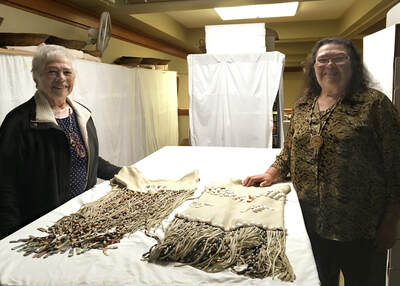
PictureLeona Wilkinson and Cheryl Seidner, Wiyot tribal members, and participants in the Wiyot Women's Group who assisted in making the Wiyot dress dropping off the loan.
As a part of the Women’s Ceremonial Dresses: Long Ago to Today, our goal was to ground the exhibit with the historic dresses from the collection ranging from the late 1800’s to the 1960s, and cycle through a rotating selection of community loans of contemporary counterparts. This tradition of making and ceremony is an unbroken path of resilience and adaptation to new materials and ways of making. For the newest dress loaned to the museum we are pleased to have on display a dress made by and for the Wiyot tribe in 2006.
This dress was made over the course of two years from 2004 to 2006 for Michelle Hernandez, a Wiyot Tribal member, as a part of a journey for the Wiyot Tribe of seeking, finding and completing a coming of age ceremony that hadn’t been done in decades. This dress is a small part of that ceremony and journey; it was lovingly made by community members and Michelle’s family for her coming of age ceremony. The Wiyot Tribe generously loaned this dress for the spring for this Women’s Ceremonial Dress exhibit. This dress is a connecting point of a revival of ceremony, of making and coming together as a tribal community. The dress here more than a finished project, it is made of deerskin, shells, beads and represents hours of prayer and artistry. 
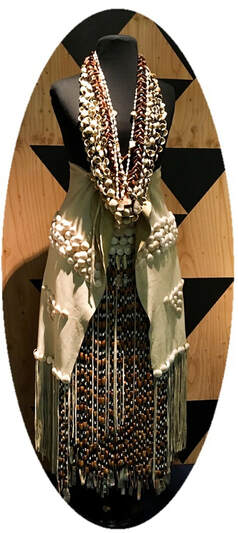
PictureThe Wiyot Tribe's dress on display at the Clarke Museum
​"Upon moving to the Table Bluff Rancheria from Sacramento Valley, Michelle Hernandez asked a simple question: How did the tribe celebrate a girl’s passage into womanhood? The answer to that question began the quest to bring back traditional practices. Recreating a ceremony that hadn’t been celebrated in over 150 years required many people, many hours of research and work, and the long term commitment of tribal participants. The Wiyot Women’s group created the dance dress, and the Wiyot men’s camp learned songs and dances that haven’t been performed in over a century. Other local tribes also brought skills and knowledge to the ceremony. Many helped in the process – local artist and Karuk/Yurok/Hupa tribal member Lyn Risling brought her personal research and experience to the ceremony; the Bureau of Land Management provided access to the south spit site; the Hernandez family learned the strict protocols to follow; tribal staff spent hours removing invasive vegetation to create the dance area." (From Rebirth Into Womanhood: A Coming of Age Journey, presentation by Wiyot Tribe)

The materials are more on the traditional side being made of deerskin, clamshells, pinenuts, abalone, Beargrass wrappings and minimal glass beads. The materials and design of the dress is from the Wiyot Women’s group that assisted Michelle and her family in creating this dress alongside a bark skirt that was worn for the coming of age ceremony. The dress was ultimately donated to the Wiyot Tribe for safekeeping and so it would be danced again.
​

Come visit the Clarke Historical Museum to see this dress in person, and the narrative of the story of this dress as representation of the continuing journey for ceremony for the Wiyot Tribe.
6 Comments

Happy National Photography Month!

4/24/2019

4 Comments


Did you know...

May is National Photography Month! We'll be highlighting the Clarke Photo Collection in this month's posts.
The Clarke has around 10,000 photos in the collections, which is about 17% of the total collection. The photos span from the earliest days of the county to the present and include a wide variety of subjects. They're some of my favorite items to work with because they can tell so many stories and illustrate change in the community- and the sometimes surprising continuity over time.
This month, we'll be taking a closer look at our photo collection-what's in it? What does it look like? We'll also be checking out ongoing work happening with the collections including our scanning project and research being done by members of the community to better understand one of the photographers who appears in our collection. We'll also highlight a new photography exhibit opening at May's Arts Alive in the Victorian Room!
4 Comments

The Clarke Goes on a Field Trip: Basket Weavers Gathering at Happy Camp

4/18/2019

2 Comments

 
This week, we hear from the Clarke's Education and Interpretation Committee that attended the yearly Basket Weaver's gathering in Happy Camp. The trip was part of a series of trips the committee is making to reach out and connect with tribes and communities that are stakeholders in the work being done at the Clarke.
Picture
Picture
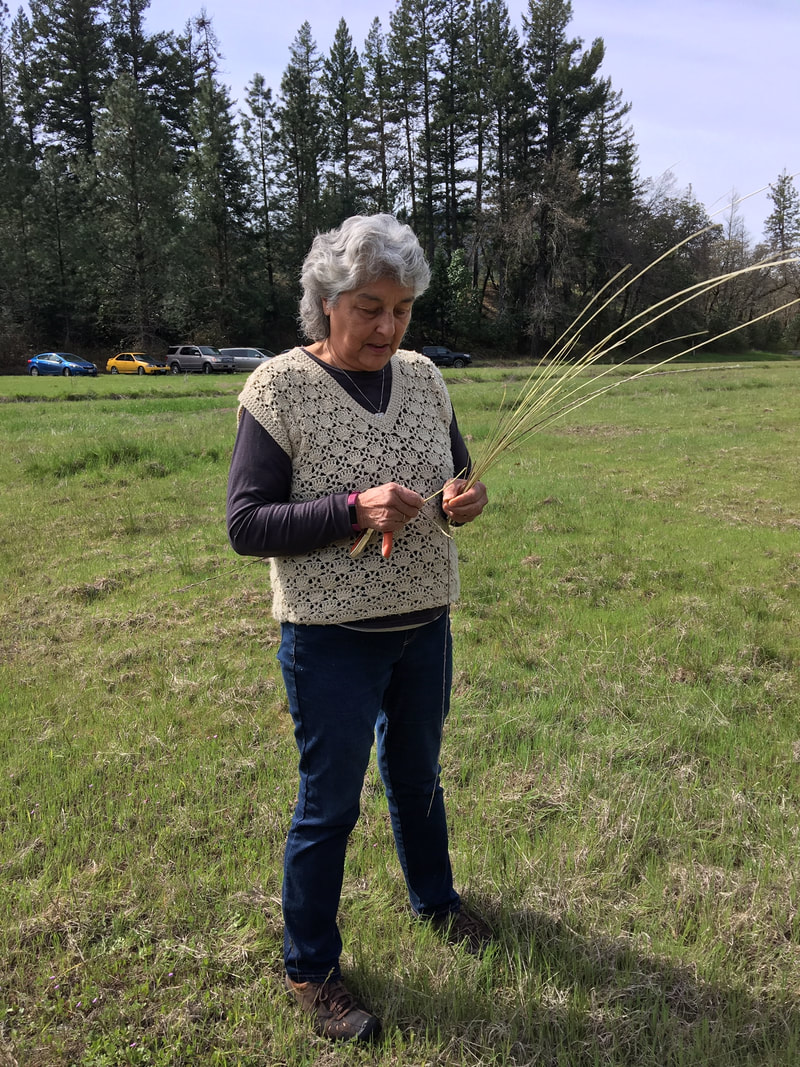
Wilverna Reese peeling willow sticks
We were able to meet with members of the Karuk Tribe’s People’s Center Advisory Committee.  The People’s Center is the Tribal museum and Gift shop.  We were able to make inroads on cultural exchange ideas such as exchanging exhibit pieces (as permitted by our policies) and sharing photos and documents from a digital perspective in cases where original pieces cannot travel.  We also discussed their digital library and the possibility of digitizing videos, CDs, etc. through cooperation with the Karuk Tribe.  We look forward to collaborating with our tribal partners.
At registration, we had some time to talk with Denna Dodds whose basketry work is currently on display at the Clarke. The weekend’s festivities then began with an opening prayer before a potluck dinner.  It was sung beautifully by Jamie Peters, a Karuk tribal member.  Dinner was followed by a night of Bingo fun, then everyone headed to their accommodations to rest up for Saturday.  
Picture
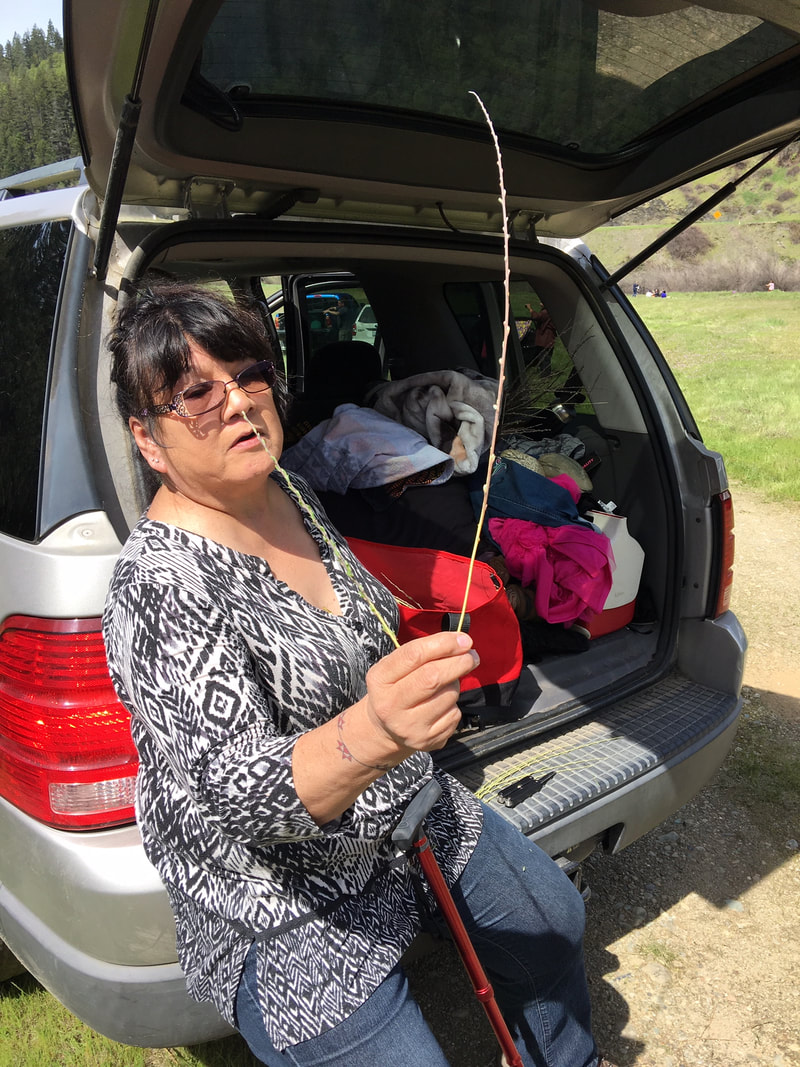
Shirley Laos holding a willow stick with buds on it
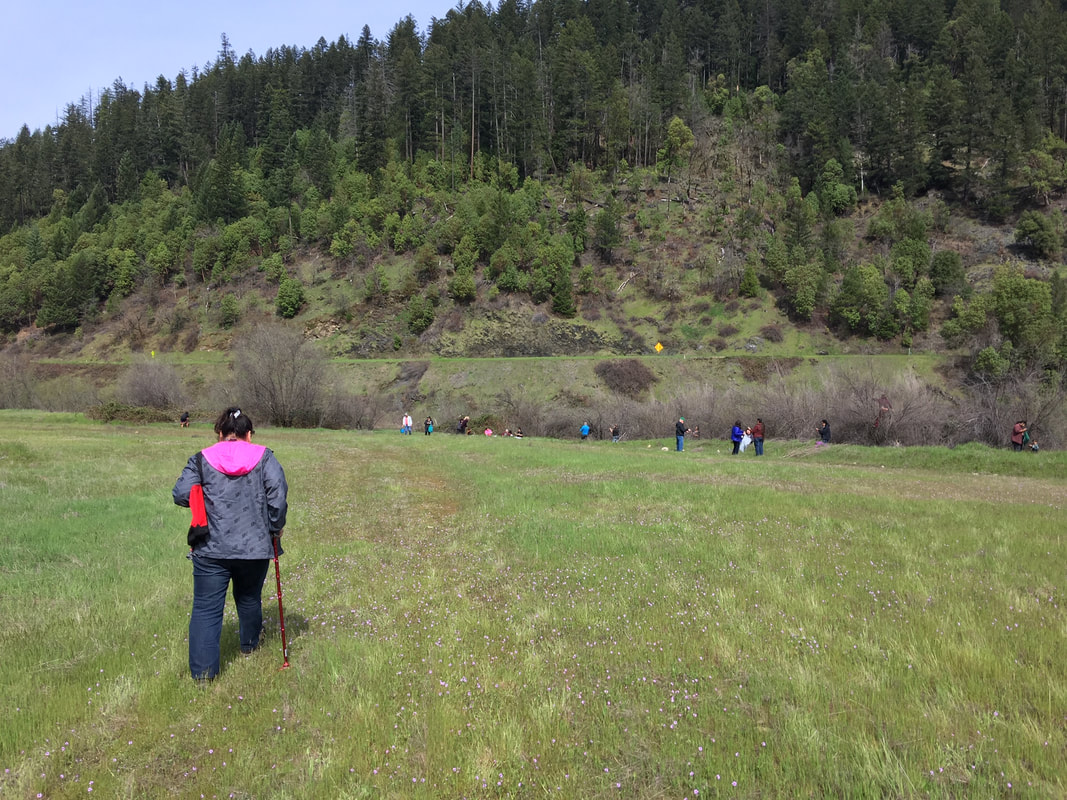
Saturday we all gathered for breakfast.  It was interesting to hear all the different weavers discuss their current projects.  After breakfast, we headed out to the nearby gathering grounds for willow sticks. We learned how to choose the correctly sized sticks for the project that Shirley Laos, CHM Board President, would need for her current project.  While finding and clipping off sticks from trees sounds easy, it’s not as easy as you might think. 
First, Willow grows in marshy grounds with lots of furrows. Some of the best sticks come from trees that may be more difficult to reach.  We learned about the stage of budding that the tree should be in for the straightest, easiest to peel, and smoothest sticks. Once a tree is identified, you may have to bend down a branch to reach the sticks needed. Many women tuck the branch under one arm and cut with the other hand.  The cut branches are put in a bag or bucket. 

Once you have the sticks you need, it’s time to peel them. Small sticks just beginning to bud are easier. Some have already begun to leaf out; those are more difficult to peel the bark from and may require smoothing with a tool or thumbnail.  If you can’t peel them right away, the stick should have their base in a few inches of water until you can get to them. Once the peeled sticks dry out, they can be stored for later use.
Picture
Shirley walks out to the gathering area.
We had a great learning experience to share with visitors to the Clarke, and we made some new friends along the way.
Thank you to Lynn Sturgis for writing this article, and Shirley Laos and Dina Fernandez for editing. Photos by Lynn Sturgis.
2 Comments

Life at the Clarke: Volunteers!

4/12/2019

16 Comments


“Volunteering is the ultimate exercise in democracy. You vote in elections once a year, but when you volunteer, you vote every day about the kind of community you want to live in.” — Unknown

Volunteers play a huge role in day-to day museum operations and are very important to the long term operation of the Museum. In celebration of April as National Volunteer Month, I'd highlight some of our fabulous volunteers and the work they do here.

Docents

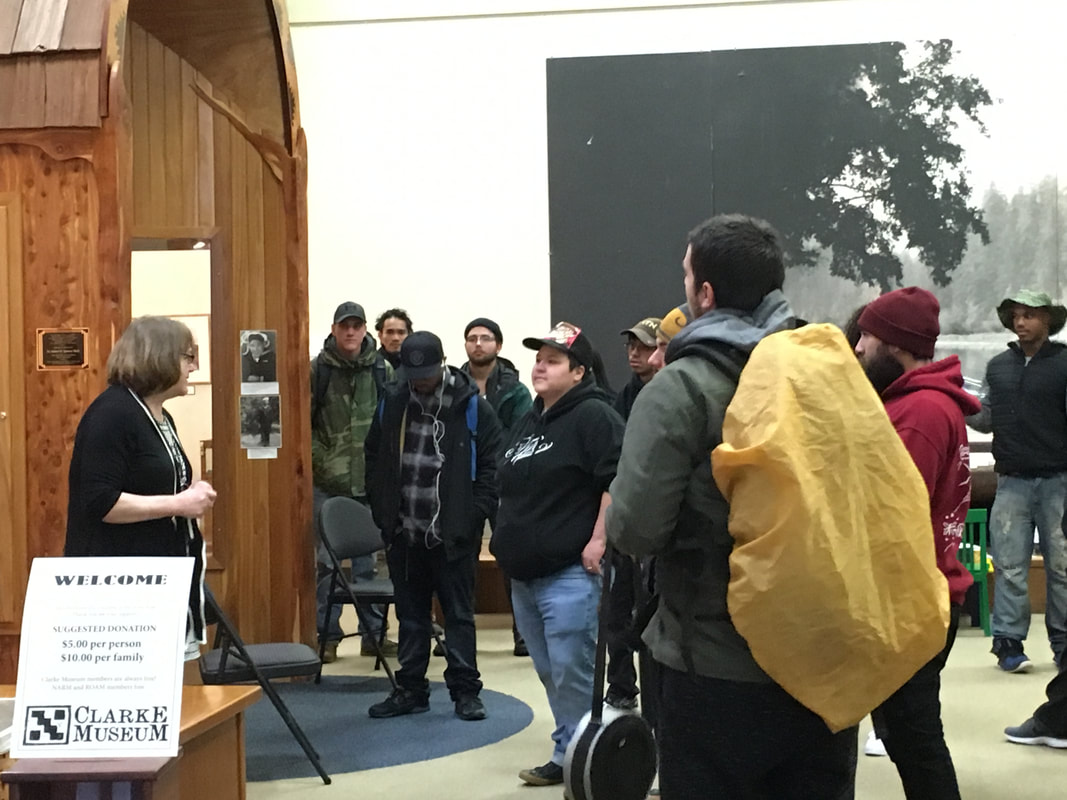
If you've been by  the museum, you've likely seen many of these folks as they staff the Nealis Hall desk. They answer questions, ring up purchases, and serve as the front-line greeters. Some have been volunteering at the museum for years, while others are new to volunteering. Most docents volunteer once or twice a week for a few hours and staff the Nealis Hall desk. Some of our greeters are also helping with museum projects such as scanning photos
Picture
Leslie Reicke, who has been volunteering at the Nealis Hall desk for around 15 years, gives a short overview of Nealis Hall to a visiting group.

Tour Guides

Tour Guides are individuals who sign up to help lead school tours of the museum. Hundreds of local kids around Humboldt County visit the Clarke Museum every year to supplement their classroom learning. Docents usually lead tours of either the main hall or Nealis Hall, and at least two docents are needed for each class of kids who visit the museum. We are always looking for more docents to help out with tours. Introductory and ongoing training for leading tours is provided free of charge by the museum. Contact us if you are interested in leading tours as there is a high demand for school tour docents every fall and spring here at the museum.
Picture
Volunteer Lynn leading a school tour in Nealis Hall

Interns

Each semester, we bring in a couple of interns to help with a variety of ongoing projects in the museum. Intern projects have included improving our WWII memorial webpage, building a mini digital exhibit on early 1900s women's hats, and scanning the photo collections into formats for researchers and use within the museum. Intern projects vary from year to year and each intern project is designed with the intern's interests and goals in mind.
Picture
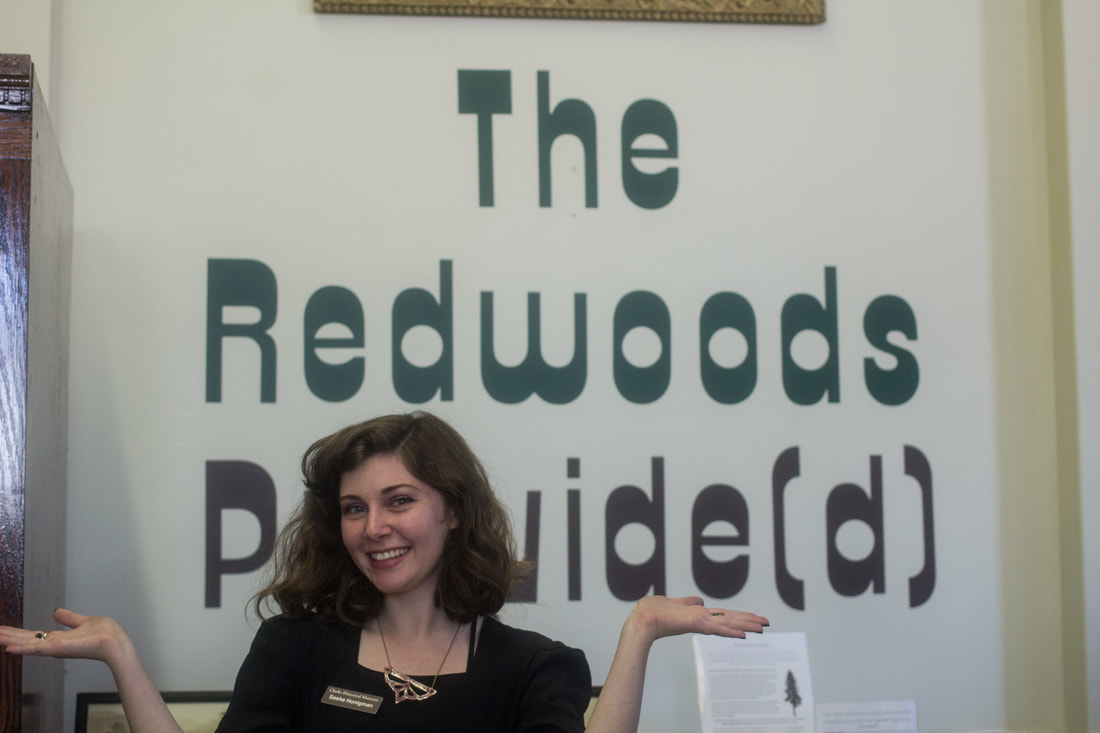
Intern Sasha while she was helping with a new exhibit opening at the Museum.

Collections Volunteers

Want to help in the museum but are more interested in the behind the scenes work? We have volunteers who work organizing the archives, digitizing museum items, updating labels and records, documenting new donations, putting things away, helping with setting up and taking down exhibits, and researching items in the collections. If you have an interest in organizing or researching, this is the project for you!
Picture
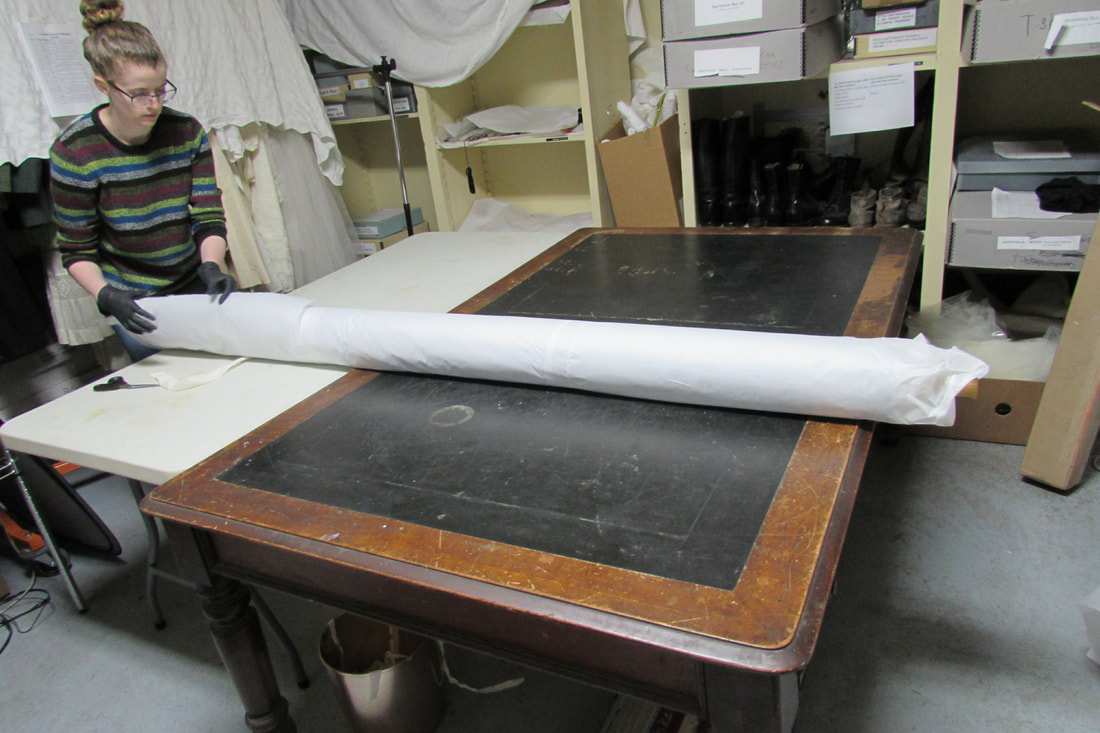
Intern and collections volunteer Shawna finishes rolling up a quilt headed to storage.

How did our volunteers get their start here?

Shirley Laos

Picture
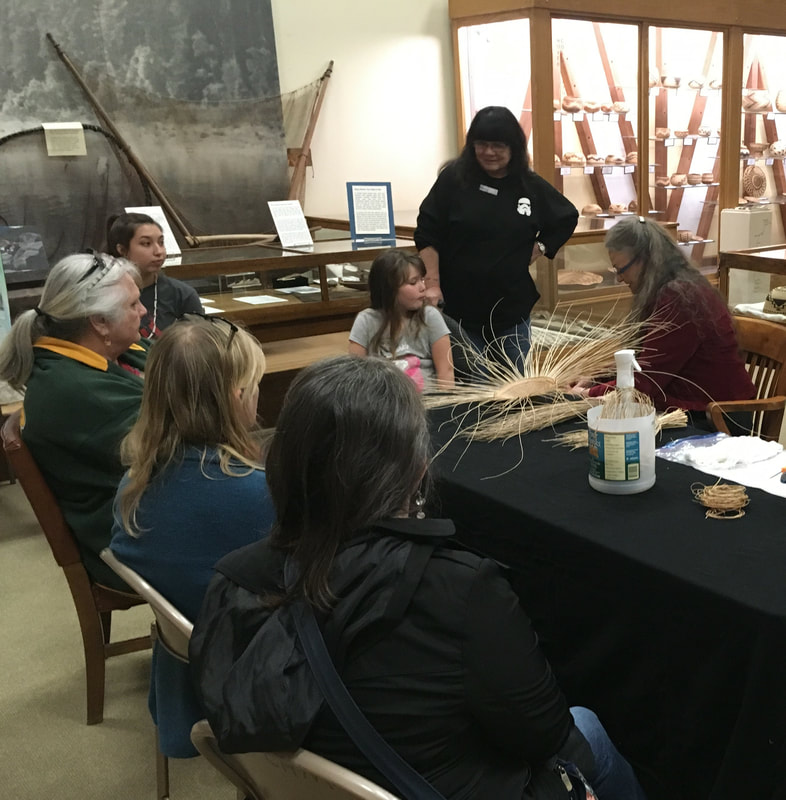
Shirley and Isobel during a weaving demonstration with Denna Dodds
Shirley first got involved at the Clarke when she became a Board member in 2017. Since then, she's jumped into being one of our most diverse volunteers. She works with a number of committees on the Board as board president, helps with school tours and events, and leads workshops during Arts Alive oftentimes with the help of her granddaughter and Junior Docent Isobel. Her favorite part of volunteering at the Clarke is being able to participate in inter-cultural interactions that take place in Nealis Hall through the workshops she hosts and sharing her cultural and traditional knowledge with the visiting public and her granddaughter

Kelly Fortner: Volunteering at the Clarke in her own words

Picture
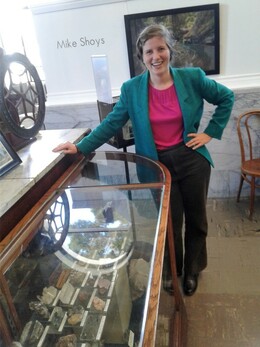
I began volunteering at the Clarke Historical Museum in July of 2018 and I have been working on a project to catalog and relabel the museum’s rock and mineral collection. I found out about the opportunity during the opening of The Redwoods Provide(d) exhibit and through Katie Buesch, who is the Registrar-Curator for the Main Hall Collections. I also know Katie through the Religious Studies major at HSU—she is a wonderful volunteer supervisor and friend!

This has been my first experience volunteering in a museum setting and I absolutely love it! The staff and other volunteers at the museum are super kind and welcoming and it is really interesting to learn a bit about the museum’s collections and about some of the local area’s history. Also, working with the rocks and minerals provides an experience that is special to me, because I also majored in Geology at HSU and I feel that there is so much we can learn through studying rocks. Rocks carry with them a story that tells of their journey from their formation to how they traveled to the surface of the Earth and into our hands. And through the study of rocks (petrology), I have learned a bit about how to interpret and convey these stories. From my perspective, I would say that stories are inherent to the way that we, as humans, understand and interact with the world. I think it is incredibly valuable to have a place like the Clarke Historical Museum in our area to facilitate the sharing of various stories from the past and I feel lucky to have the opportunity to volunteer there!

Volunteering at the museum is a great way to gain new skills, give back to the community, learn more about our area's fascinating history, and meet other people interested in similar activities.
Picture
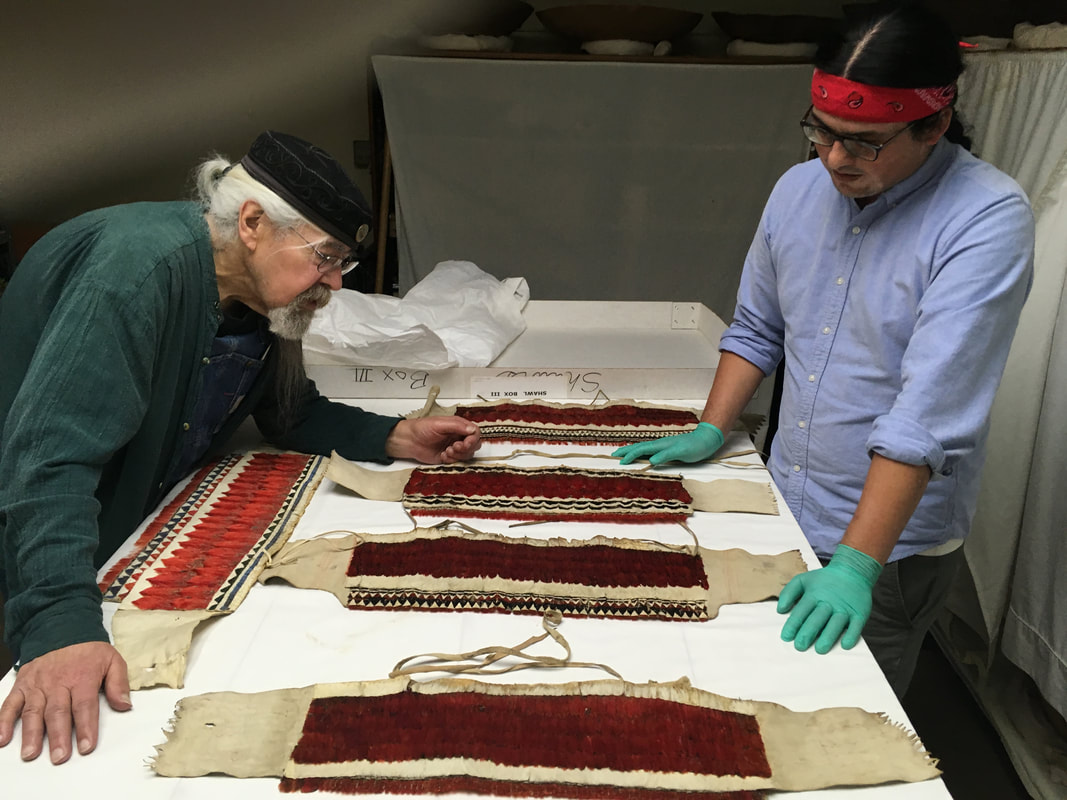
Former board president Gene Brundin inspecting recently danced Jump Dance headdresses (Yurok: Plegokw, Karuk: páathkir / pathkir, Wiyot: duraga'w, Hupa: me:wi-na:sita:n) with Gary Markussen Jr.

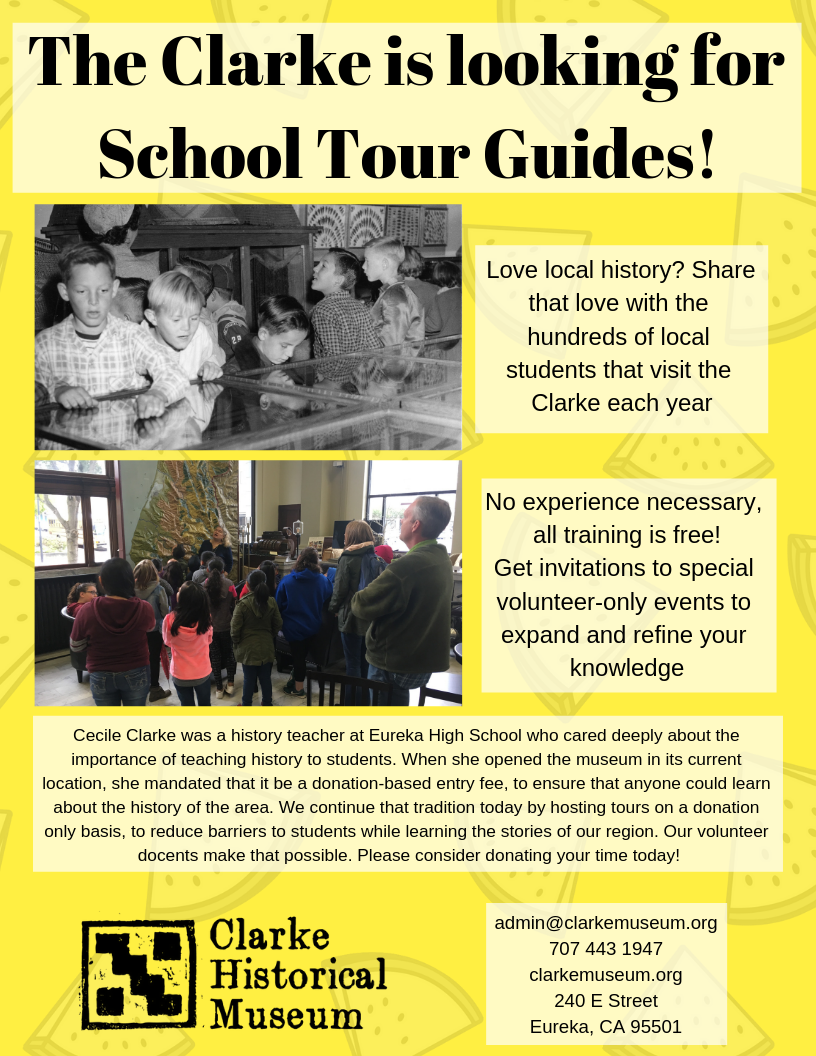
Right now, we are most in need of additional tour guides to help with upcoming school tours. See the flyer below and feel free to contact us if you are interested in training.

Picture

Never worked in a museum before? No need to fear-we offer all initial volunteer training and ongoing training for free. Join our newsletter to hear about upcoming training opportunities or become a member to help support our volunteer program! You can also visit our Volunteer page to learn more.

16 Comments

New and Old Baskets at the Clarke!

4/5/2019

2 Comments

 
PictureTwined utility basket, unknown Hupa weaver, early 1900's, Clarke Collection.
The Native American collections at the Clarke are more than a beautiful collection to view while visiting. We have hosted weavers and regalia makers over the years to go through the collections to gain insight on ways of making and inspiration for the creation or repair of newer basketry and regalia items.

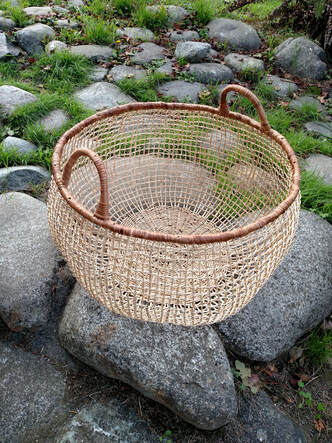
Denna Dodds, a Karuk tribal member and 2014 & 2017 recipient of the Victor Thomas Jacoby Award, visited the Clarke Collections in the Fall of 2018 to assist with finishing a large open weave utility basket with handles.

Picture
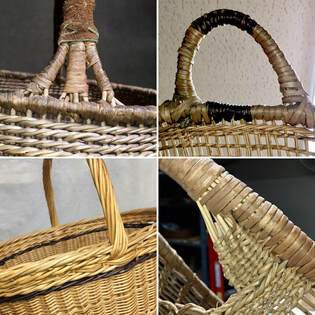
She was excited to look at handles on larger storage baskets, as well as other connection points such as handles on baby baskets and other pack baskets. Denna was looking at how the handles were wrapped, how they connected to the structure of the basket. There is no right or wrong way for basket handles to connect, some are made up of the hazel sticks that made the body and curl back down to meet the rim of the basket. Others are woven separately and connected when the rim is wrapped in spruce root. 
She chose a synthesis of different handles that were pulled from storage to examine in the end. Resulting in this beautifully woven hazel and spruce root handled utility basket. Denna generously chose to loan us her set of newly made baskets including an open weave tray and spoon basket.

Her baskets are displayed alongside a selection of other utilitarian baskets that were used to research handles. What is most striking is the brightness of the newly harvested and woven hazel sticks on Denna's basket compared to another handled utility basket from before 1900. 
 
We are honored to be able to show Denna's new baskets  alongside the older ones from the collection showcasing an unbroken tradition of weaving here in Humboldt County. 
Picture
Storage Basket woven by Denna Dodds (Karuk), 2018, photo courtesy of Denna Dodds
Denna Dodds and Theresa Surbaugh will be doing a weaving demonstration and answering questions all through Arts Alive. Come join us Saturday April 6th 6pm-9pm at the Clarke!
2 Comments

Projects at the Clarke: Quilt Preservation and Documentation project

3/29/2019

39 Comments

 
This week, We'll go behind the scenes at the Clarke to check out an ongoing project to preserve the quilt collection with the help of the Redwood Empire Quilter's Guild.

“A museum has to renew its collection to be alive, but that does not mean we give on important old works.” -David Rockefeller

Every two years, the Clarke hosts a quilt exhibit that coincides with the Redwood Empire Quilter’s Guild biennial quilt show, which is hosted at Redwood Acres Fairgrounds in Eureka. The Clarke has had a long relationship with the Quilter’s Guild, who host a fund at the Humboldt Area Foundation and have helped to fund a number of projects to support our quilt collection, including money for a custom case for the historic Grant Quilt and storage racks for our quilts while they’re not on display. In 2018, we applied for and received a grant from the Guild to replace the archival tissue paper that the quilts are stored in. The tissue is replaced every 5 years to prevent damage to the quilts through acid accumulation. As the quilts naturally break down (as all things eventually do), they give off acids that, if concentrated, will accelerate damage to the quilt. Replacing the paper slows that accumulation of acids and helps preserve the quilt. With the grant, we also received money to bring in an intern to help with the project, which has been incredibly helpful and has helped make the process much more efficient and safer for the quilts.
This project has been a lot of fun to work on and has given us the chance to review the quilt collection, update records, and think more about the information contained within the collection. In the process, we’ve found incredible quilts ranging in size, pattern, color, age, and more. Quilts are artifacts that are both utilitarian and, in a trend that began in 1970s, seen as pieces of art, and it’s not unusual to hear of people investing considerable emotional and physical energy into making them. In years past, before the mass production of fabrics and improved transportation, fabric was expensive and people did all they could to save and reuse fabrics, which turned the quilts into not only usable items but repositories of memory as you could look at the quilt fabrics and recall that this came from your mother’s dress or that came from your uncle’s suit. The quilts in the collection were prized possessions that were used, repaired and used again to keep generations of Humboldt County residents warm.
Picture
​With the upcoming quilt exhibit, I’ve been thinking about how the Clarke quilts relate to the general Humboldt County community. Some of them were rather large quilts, up to 80-90 inches long and sewn by hand, and some of these particularly large quilts were made to raise money. It was an undertaking that was sped up (and was much more fun) when friends were involved and could help out with the process. Women could find support for their creative endeavors, appreciation for the hard work they did, and a space to share experiences, stories, emotions, and perspectives outside of the male gaze and social structure. There is also a story which made the local newspaper of how Susie Baker, a woman from Blue Lake and the author of the Susie Baker Fountain Papers housed at HSU, invited a group of friends over for “the ostensible purpose of tying a quilt intended, so it was said, for a church sale.” in 1915. When the group arrived for the dinner party that went with the quilt tying festivities, they found envelopes with the announcement that she was engaged to a Mr. Eugene Fountain of Arcata, which turned the social event into a celebration of a new phase in Susie’s life. While the quilt tying is only passingly mentioned here, it served as a conduit for collaboration, as the women came together to work on the quilt which would benefit another community they shared, their local church.
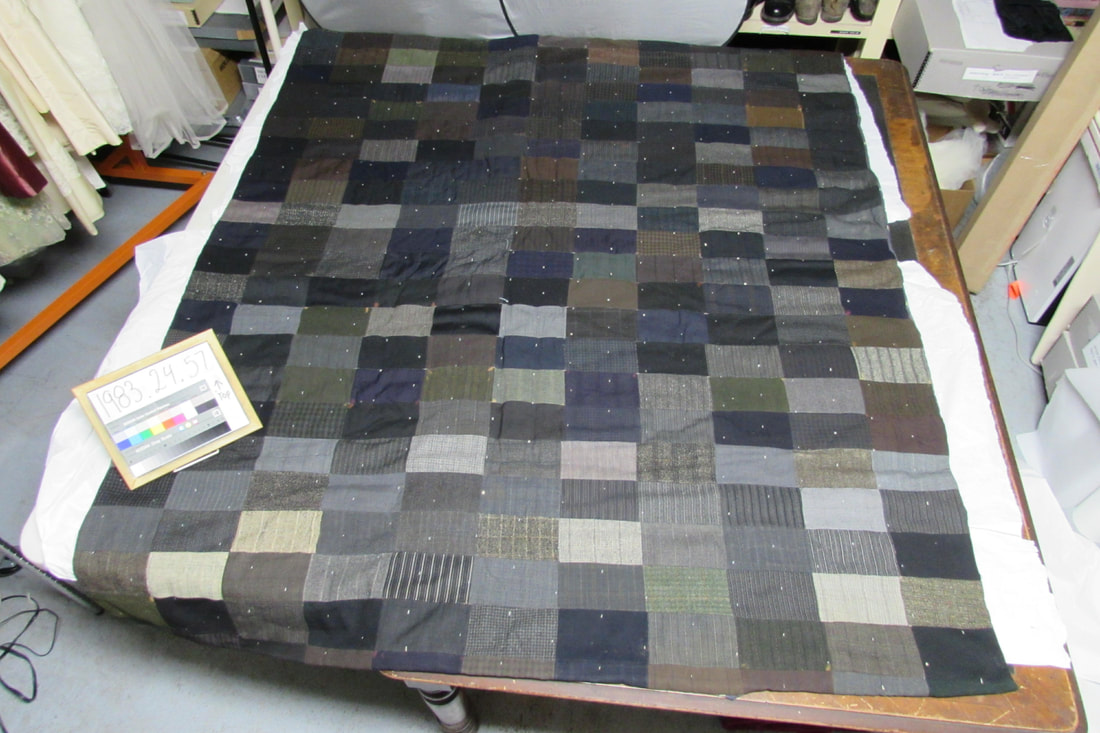
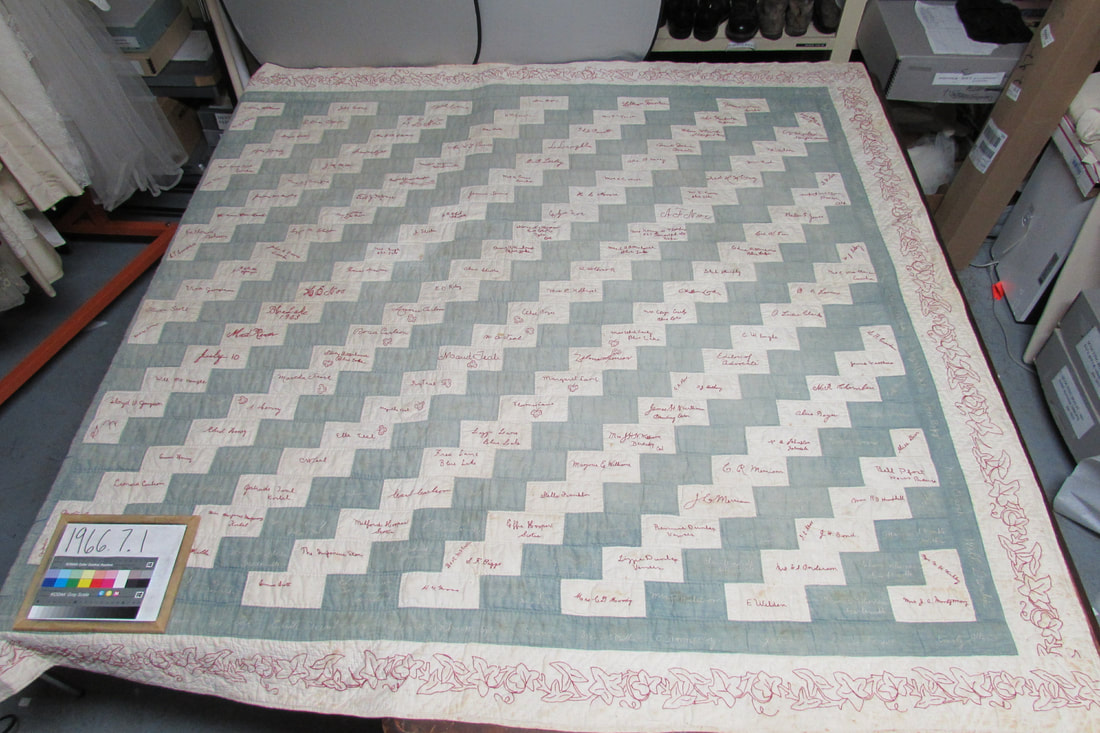
We have quilts from other communities, such as an unfinished crazy quilt top that was started to eventually be auctioned off to raise money for a local fraternal organization, but for some reason was never finished, and a quilt featuring embroidered signatures of community members from Blue Lake, Eureka, Garberville, Berkeley, Korbel, Arcata, and more that was thought to have been auctioned off to raise money for the establishment of a new Order of the Good Templars group in Blue Lake. More often than not, the makers of these quilts are unknown or unnamed. It’s a mystery, but you can still learn a lot about the women who made the quilts, and the period that the quilts were made in, even if you don’t know their names or their stories.
Picture
Blue Lake Signature Quilt
Be sure to come by and check out Sewing Circles when it opens in July!
39 Comments

Ongoing Projects at the Clarke: Building Restoration

3/27/2019

3 Comments

 
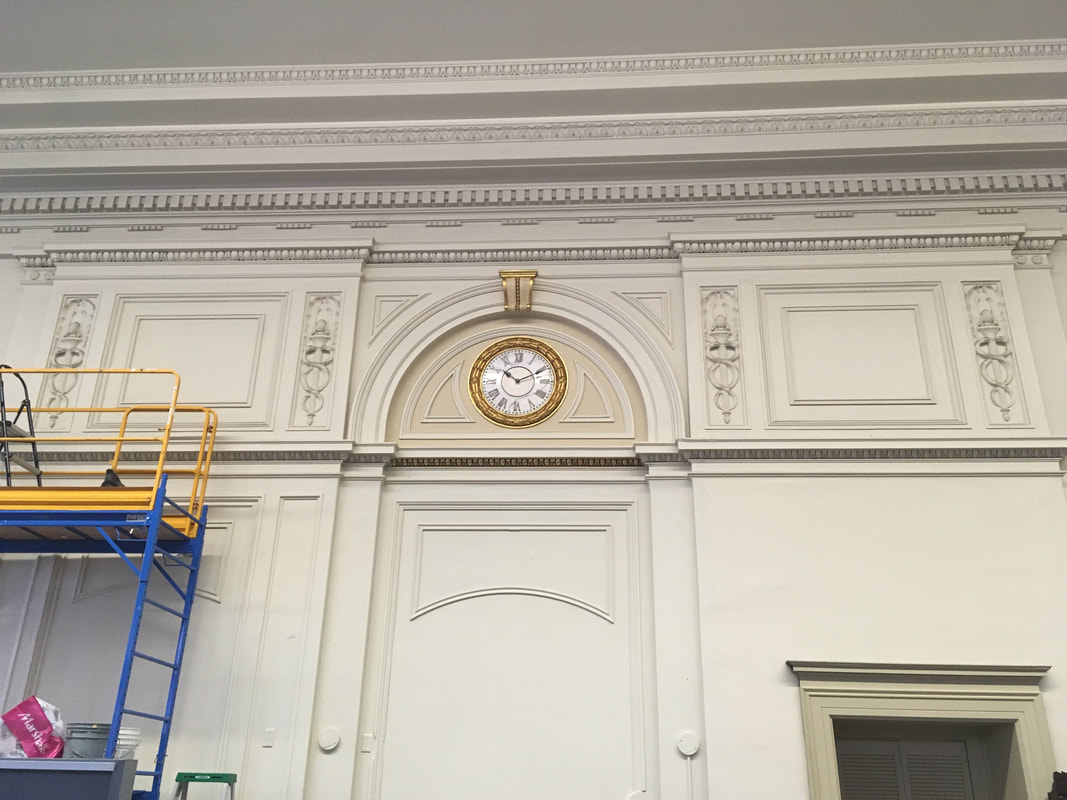
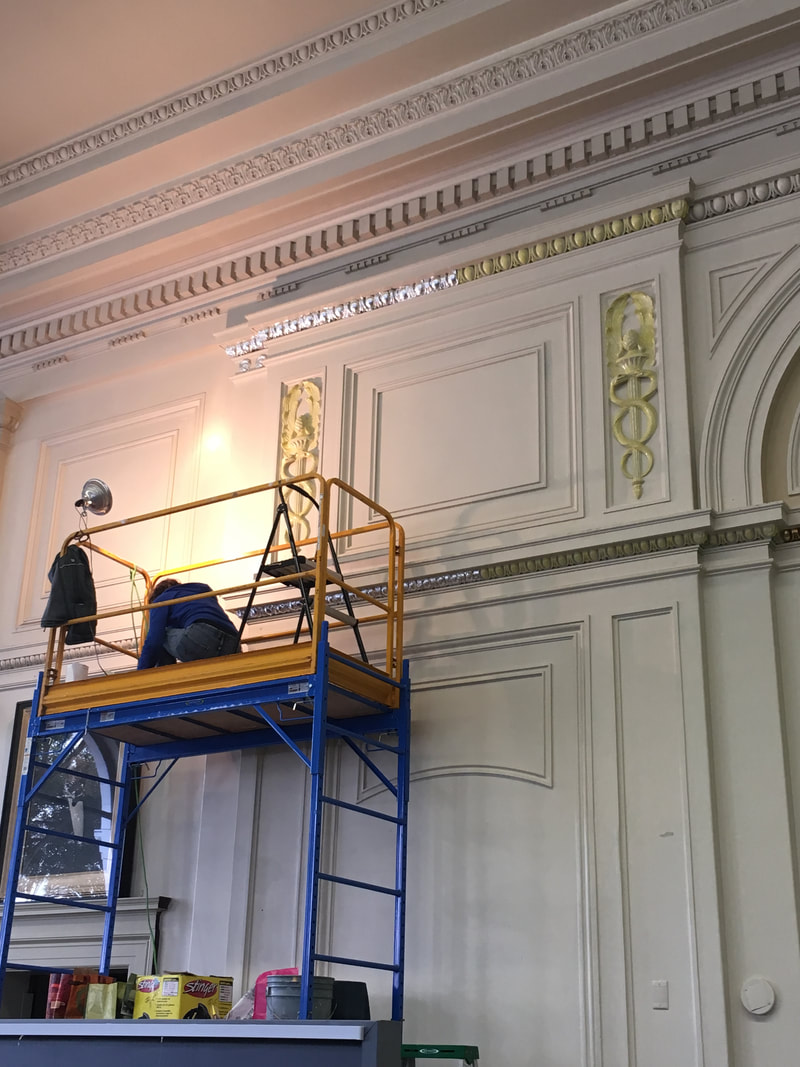
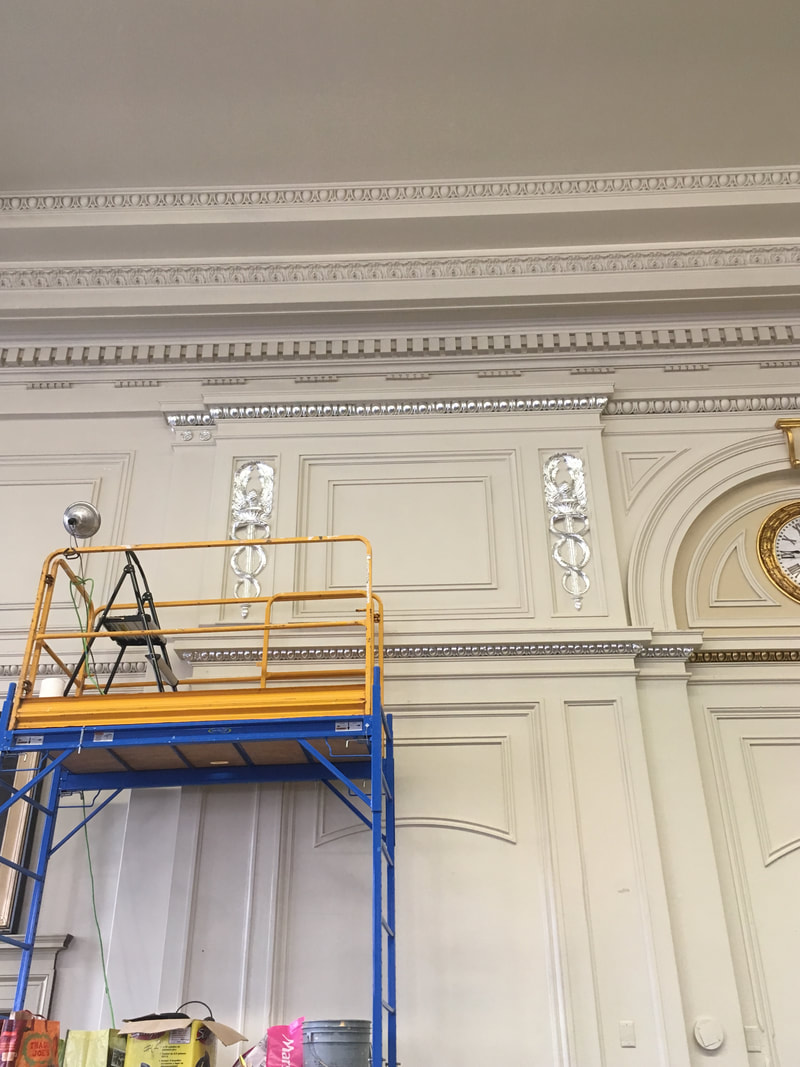
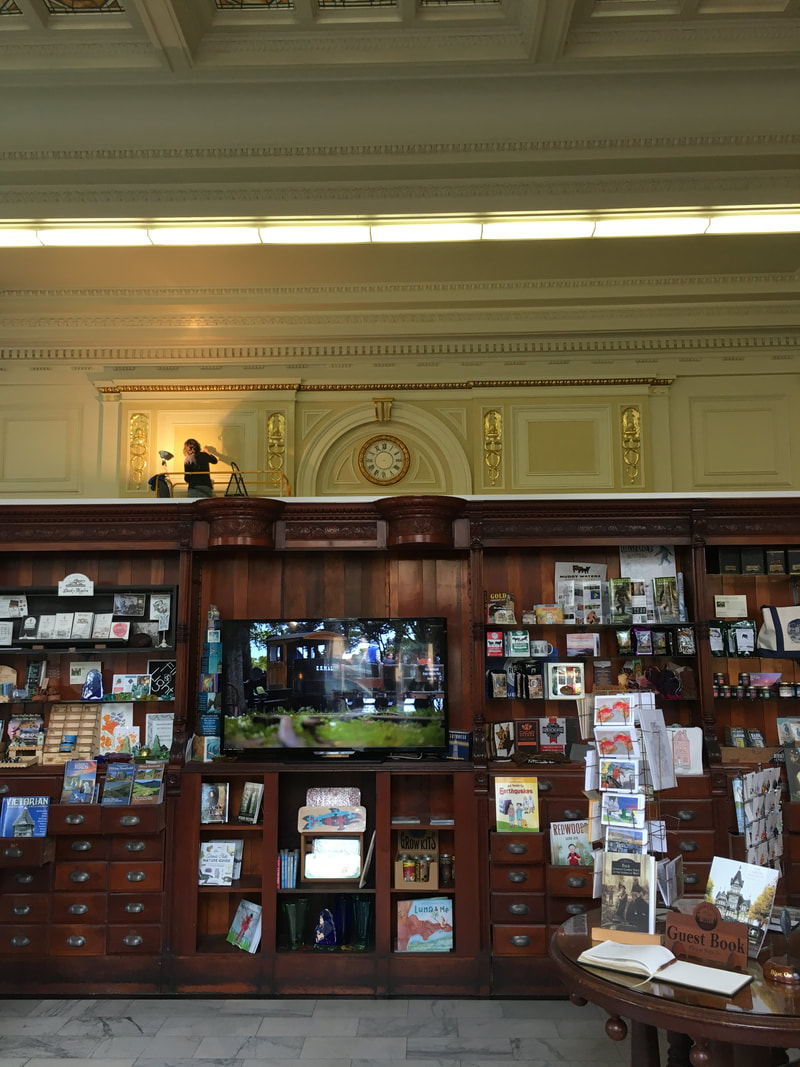
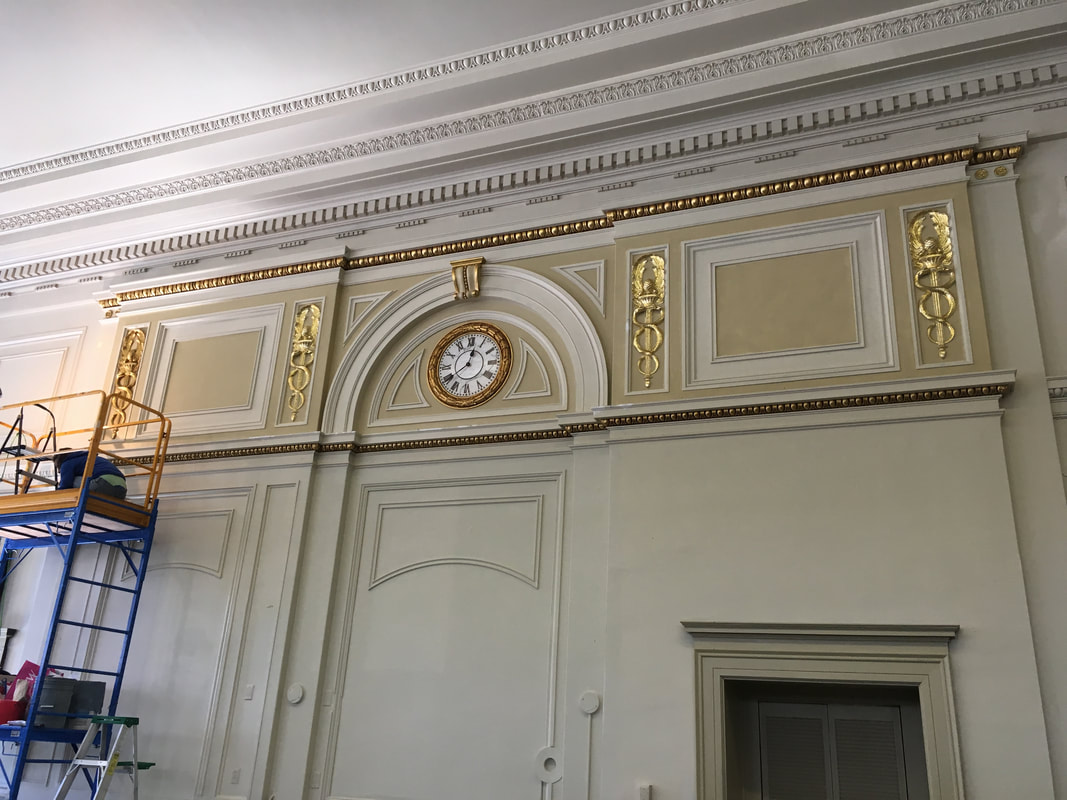
We oftentimes say that our building is our number 1 artifact: it's on the National Register for its unique style, it protects our collections, and serves as a great landmark in the heart of old town. Over the last few months, we've been working to restore the interior of our building, starting with the clock in the center of the building. Lisa Jarrow completed the first phase a few months ago. 
This last week, Lisa Jarrow came by to continue working on the restoration of the clock wall- to great results! Here's a few progress shots, and a photo of the completed section.
Picture
The "Before" shot
Picture
Picture
Picture
Picture
The home stretch!
3 Comments

The Rise (and Fall) of the Eureka Streetcar System

3/24/2019

10 Comments


“The day of the trolley car seems definitely out, just like the horse and buggy, the high boy bicycle, bareback riders and what have you… When the trolley came into being we thought we had arrived at the ultra in street car travel.”
​-Susie Baker Fountain Papers V 81, pg 192, dated Sept 10 1943

Picture
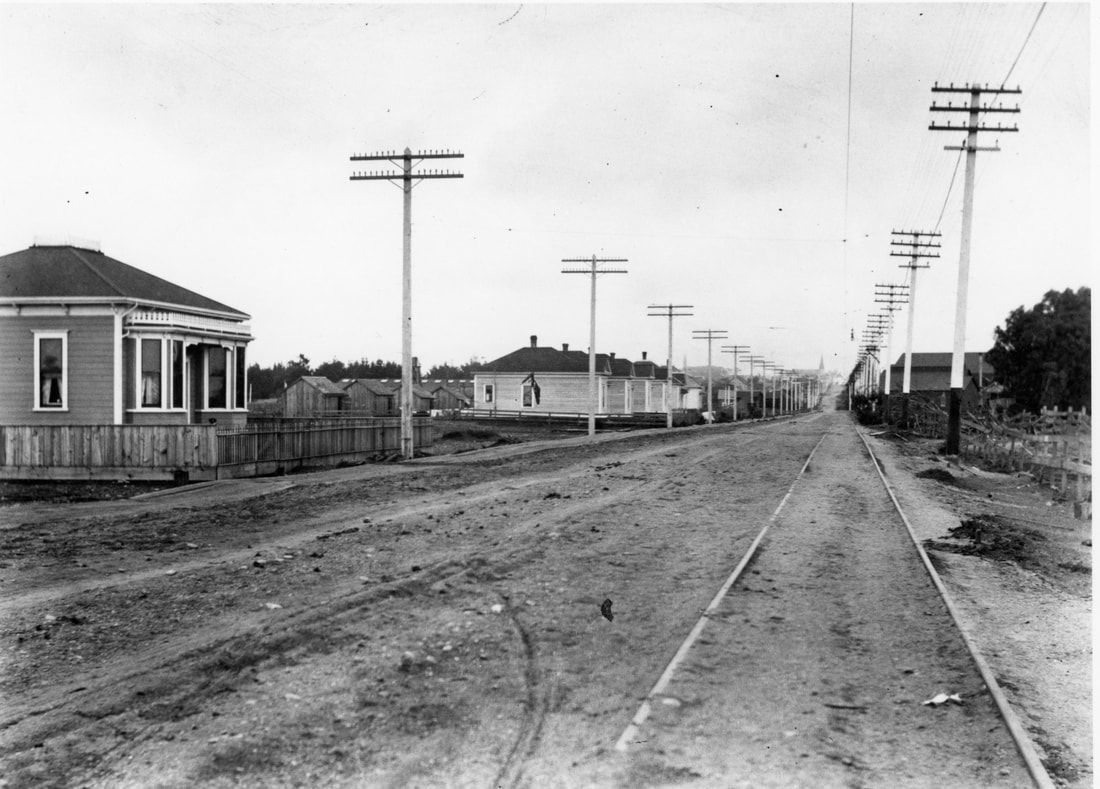
Early Eureka was a small place, locked into its location by the bay on one side and a dense forest on the other. People could walk or ride their horses wherever they had to go. But as the town began to grow in population and physical size with the logging of the neighboring forest and the construction of levees on the bay, a new alternative had to be found for those traveling to the city center from further and further away.  
Picture
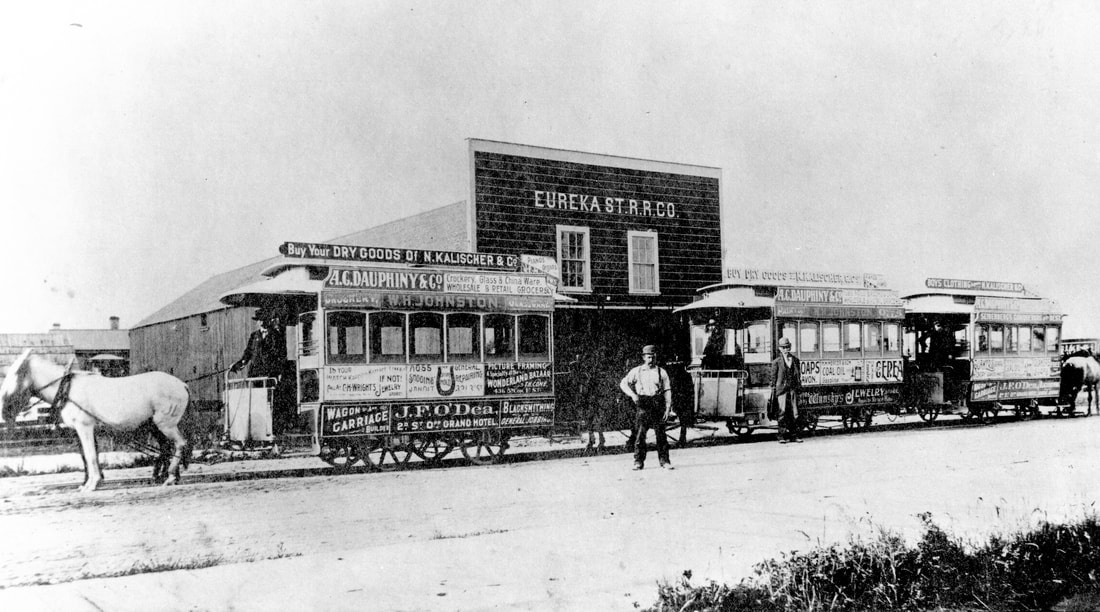
The first streetcars to move through Eureka were horse drawn ones in 1888. The line ran from H Street from fifth out to J Street and was said to be a very popular line. It was operated by an elderly man named Collins. An editorial reminiscing about the line stated the Collins would irritate passengers in the wintertime with "the odor from [his] lunch, particularly the coffee in the thermos bottle… Mr. Collins paid no attention.” In 1894, a street line was built from 5th street along E street out to the city limits, which at the time was Trinity Street. The streetcar company, named the Eureka Street Railroad Company, came upon tough financial times and on March 30 1897, the horses and rail cars were sold to people in Eureka. However, the need for public transportation was still needed as the area continued to grow. The rights to operate a streetcar line were auctioned off to the highest bidder, who happened to be George Henderson of Oakland.  
Picture
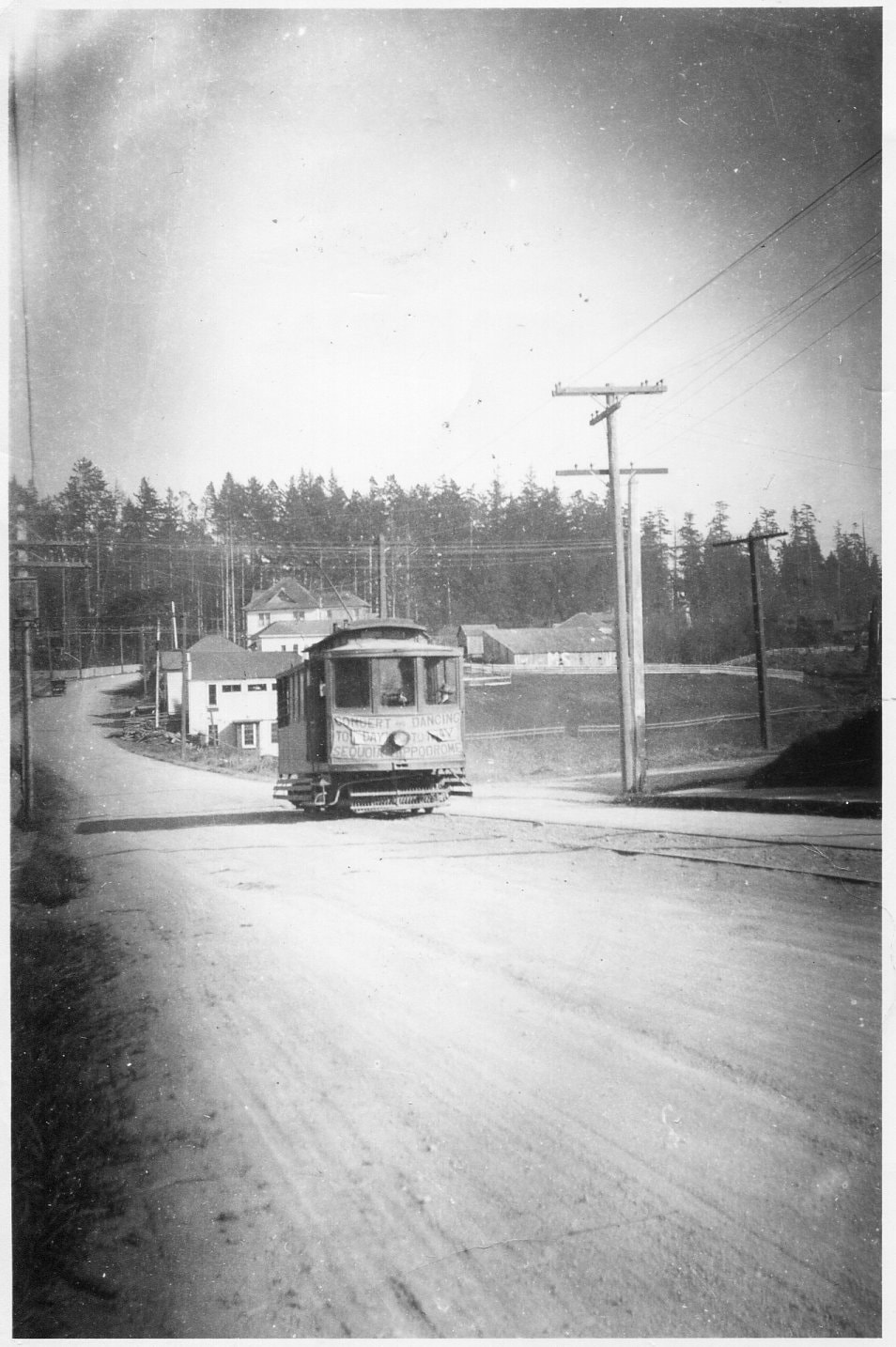
In 1903, George Henderson was the Vice President of the newly formed Humboldt Transit Company and announced that three electric trolley cars would be arriving in Eureka to whisk the townspeople into a new era of travel. They were described as attractive cars with glass windows on the sides and no windows on the front and back of the cars, allowing the flow of fresh air through the cars, which could seat 50 and supposedly hold a maximum 150 people. The electric streetcar line began operating September 16, 1903 with only slight difficulty- two cars jumped the tracks on the first day at California and Summer streets. Regardless on that first day of operation, 3000 people rode the trolley cars (our of a population of 11,000). Talks began almost immediately about adding a line out to Arcata.
Picture
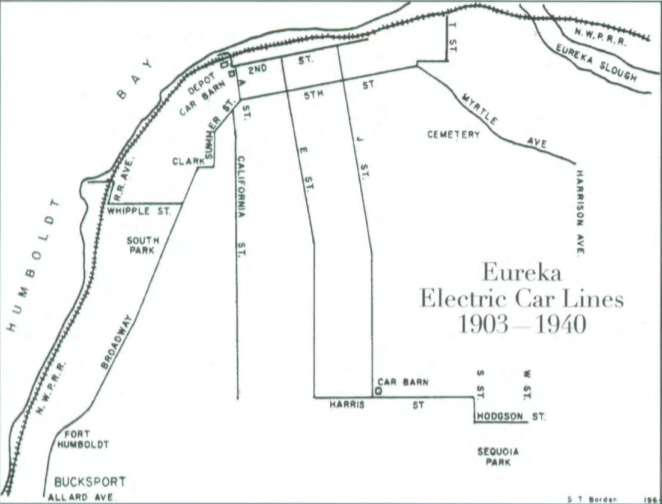
Map from the Summer 2009 Humboldt Historian article "Song of the Streetcars" by Naida Olsen Gipsen
Henderson’s concern was to continue expanding the trolley lines in Eureka, a concern supported to a great degree by lumber companies in the area, who had built their mills on the far sides of town and needed to be sure that workers would be able to get to the mills for work each day. Within a month, the streetcar line on California was extended from Wabash to Harris Street. Within a year, the E Street line was extended to go from 2nd street to Harris Street. The street lines also ran from Bucksport to Harrison Avenue and from California and Harris out to E Street and from Harris to Sequoia park with a spur on J Street. There were plans to build a streetcar line connecting Arcata and Eureka along the Old Arcata Road (a route that had been surveyed by J. N. Lentell of Lentell Map fame), however this route was shot down by the Eureka City Council in fear that the streetcar would interfere with already operating passenger service on the California and Northern Railroad along the Bay. There were also talks about having a line from Eureka to Ferndale.
Picture
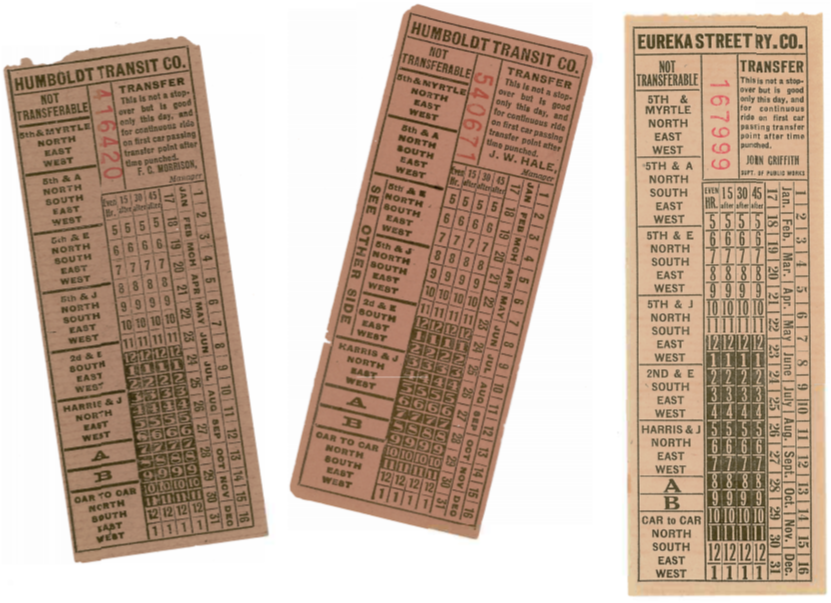
Tickets from the Eureka Street Rail Road Co and Humboldt Transport Co., courtesy of the Humboldt County Historical Society
The streetcars operated without issues for a few decades, however, issues did arise. A girl was standing on the tracks one dark and stormy night and was hit north of Harris on E Street. She happened to be the daughter of the superintendent of Jetty Repair, Mr. Powers. He sued the company and won, however the case was appealed and settled out of court. A popular Halloween prank was to grease the tracks and wait for an unsuspecting trolley car. One year, cars went across greased tracks at Harris and Bucksport and the cars jumped the tracks and ended up “many feet beyond the end of the line”. There are also a few quotes about “the arrest and trial of a “youngster who put rocks on the track”, however we haven’t been able to find out the outcome of this case.
Picture
Eventually, when the streetcar company faced financial difficulty. That difficulty may be related to the fact that Henderson was sued by his ex-wife Bereba Henderson for the money he used to promote the streetcar line and other railroad interests, which totaled about $6,000. Other sources say that the transportation company also operated an oil business, which was profitable enough to cover shortfalls with the trolley system until the company lost its oil contract and had to recoup losses by reducing trolley car crew sizes to one man operated cars, however it wasn’t enough. The City of Eureka took over managing the cars until a bus system was created and the streetcars took their last ride on February 20, 1940.  
Picture
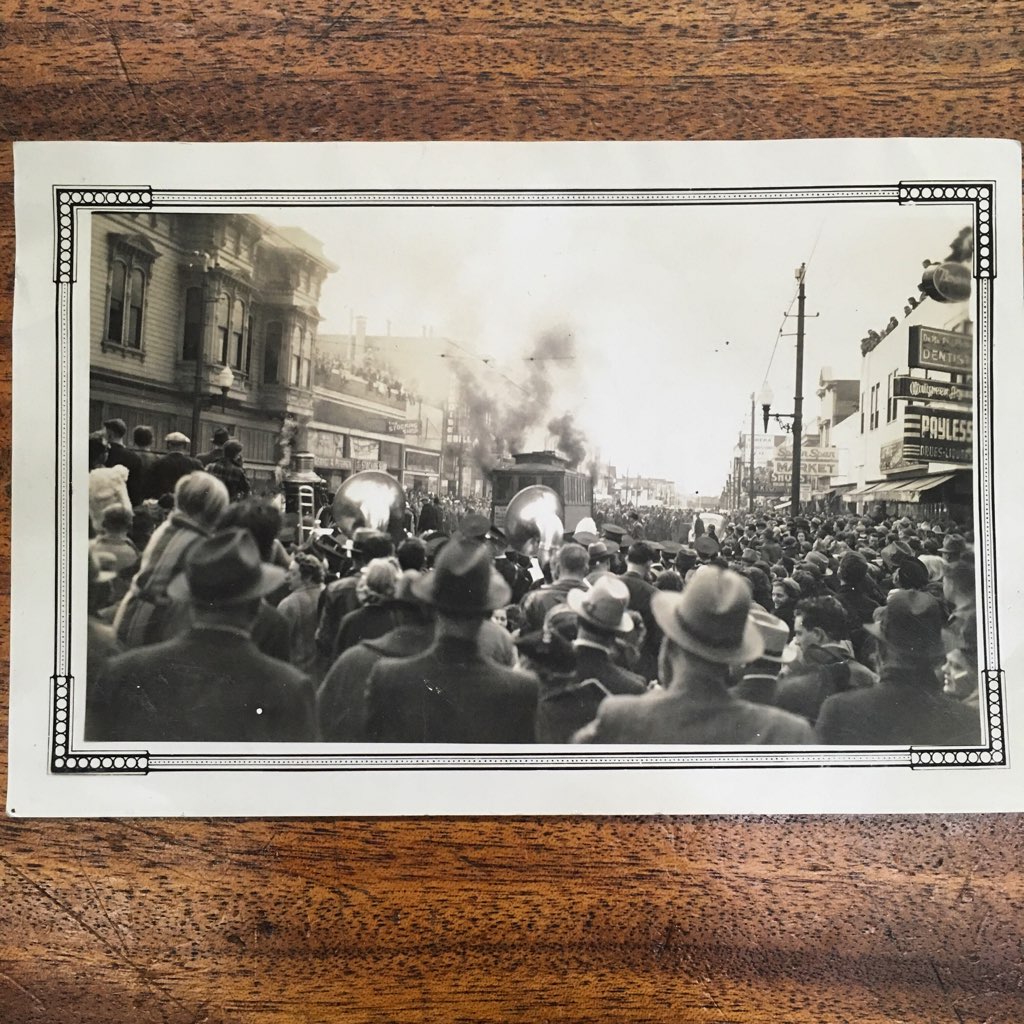
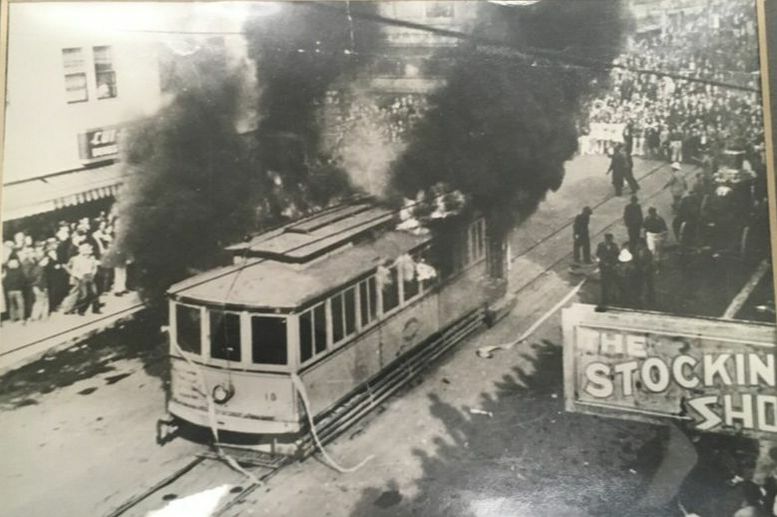
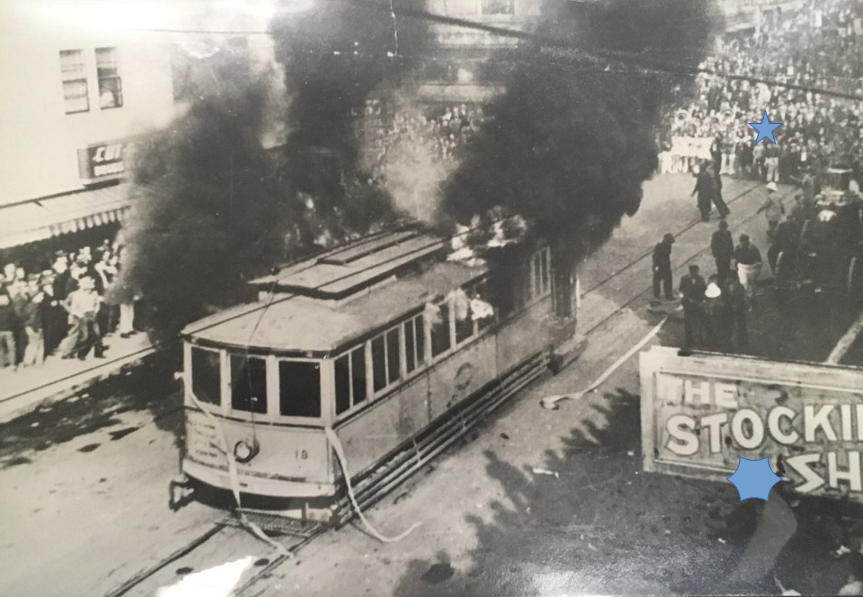
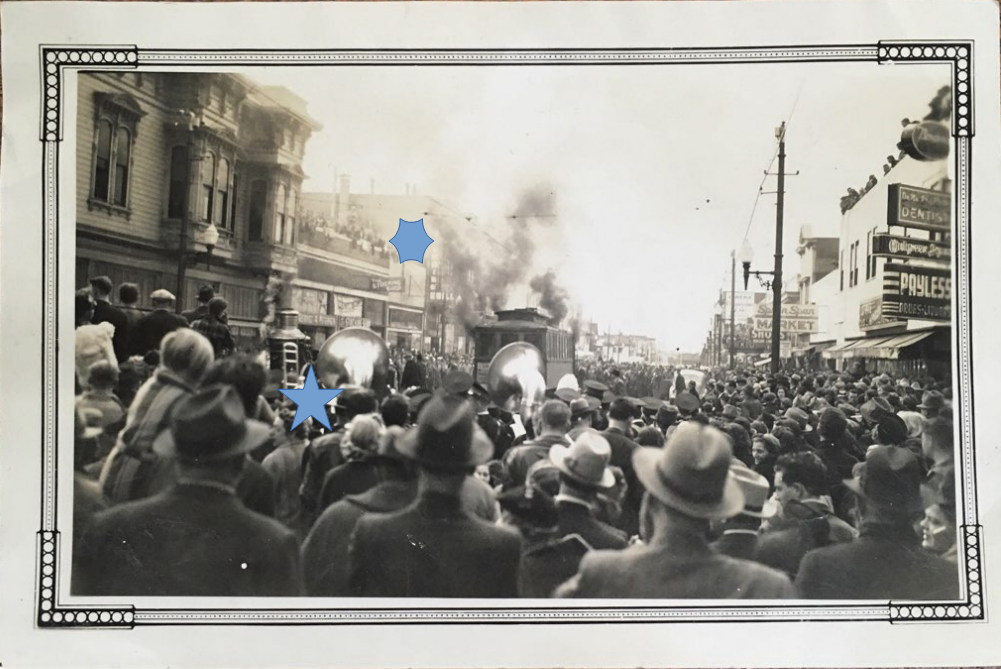
The Manning Transportation Company had bid for the franchise to run a bus system for the city and won. The new bus system, Eureka City Lines, opened on February 23 to much fanfare, summarized by local newspaperman Will Speegle: “Seldom, if ever, have there been so many people on Eureka’s streets at any celebration time. The features of the parade were a mule-drawn, old -time car and three of the electric cars that have been discarded. The climax of the celebration was the igniting of one of the old streetcars [streetcar number 18] as it stood on the Fifth Street track in front of the White House. In a few minutes the old car was a seething mass of flames and the nearby portion of the street on either side was like an oven, scorching some of the buildings. A fire alarm was sounded, and a fire pumper arrived and soon had the flames under control” There are a number of photos of this event, with crowds watching the spectacular end of the streetcar system. Looking closer, one can see that there is a live band, including a few tubas and a trombone and people filling the streets, some people are even watching from nearby rooftops.
Picture
Picture

Look at that crowd!

Thanks to Clarke Board Member and HSU Special Collections Librarian Carly Marino for sending over scans of the Susie Baker Fountain Papers for this article. The Susie Baker Fountain Papers are publicly accessible through the Humboldt State University Special Collections. You can learn more about this spectacular collection here.
Thanks also to Morgan Harvey at the Humboldt County Historical Society for sending over the incredibly thorough and helpful Humboldt Historian article named "Streetcar System began with horse-drawn cars" by Lynwood Carranco and scans of tickets 
10 Comments

From Boom to Bust... And Back: Putting Down Roots

3/17/2019

9 Comments

 
While miners in the mid 1800s get the spotlight for spurring settlement in many different regions in California, farmers putting down roots kept some of those settlements in place and established many others.
Picture
Picture
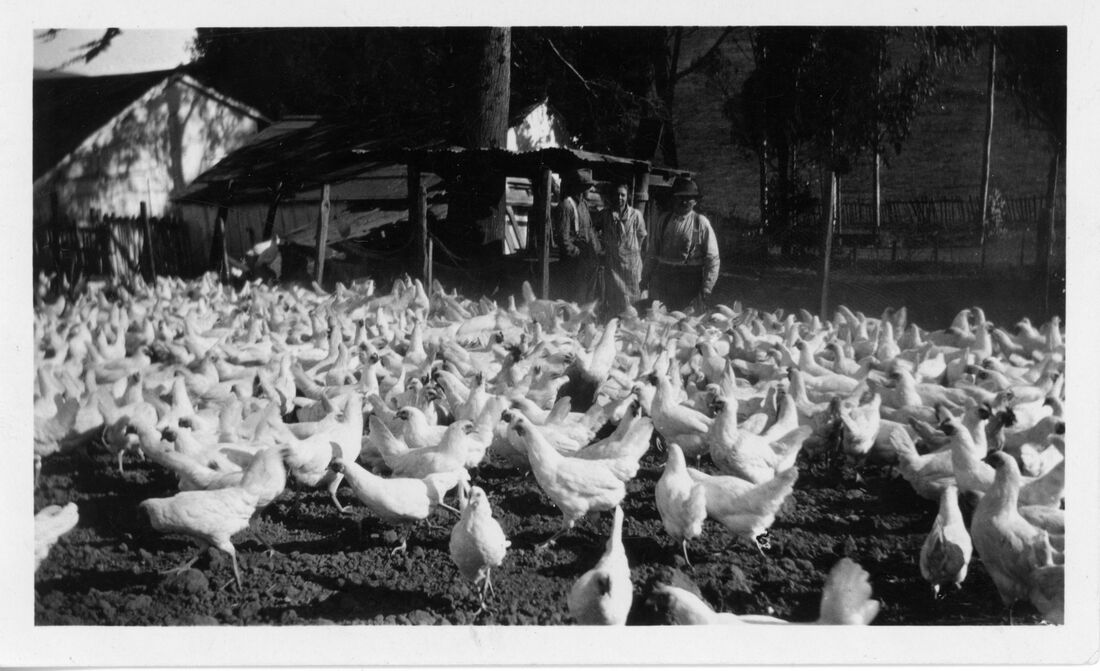
From 1850-1880, agriculture was the primary employer in the Humboldt County region, and starting in the 1870s, a significant portion of those working in the industry were European immigrants. Danes and Italian-Swiss emigrated to Humboldt County to work in the dairy industry, which had been a strong industry in their home countries. The immigration trend continued into the 20th century as people from Norway, Portugal, Finland, and Italy came to work in the various industries in the county.
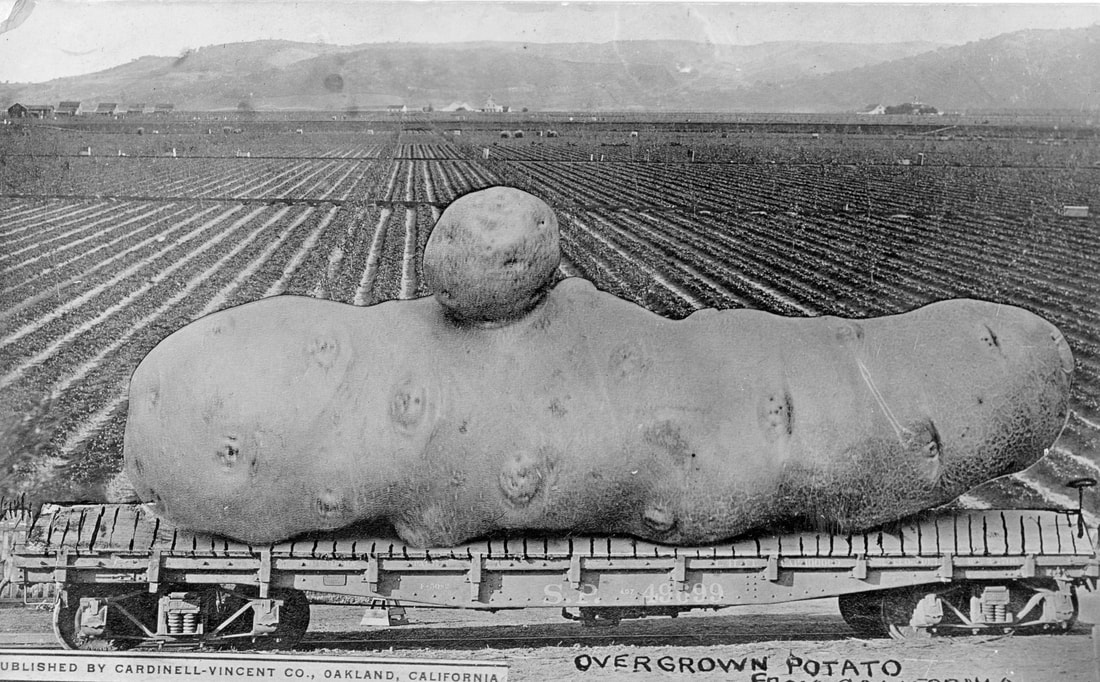
​Settlers to Humboldt County brought their own crops with them to the area, searching for the ‘golden crop’- one that would grow exceptionally well and could be sold for a good profit. That first crop happened to be potatoes. In 1874/1875, farmers raised and exported almost 50 million pounds of potatoes, making the crop a defining part of early Humboldt industry. However, it was not meant to last. The year following the 50 million pounds crop, production dropped by a third as as blight hit Humboldt County. That same year, potatoes from Sacramento flooded the San Francisco market and out-competed Humboldt potatoes due to the shorter shipping distance, reducing Humboldt’s potato exports by over 90% from two years prior. Farmers began to diversify into products like oats and beets in the 1880s. There was a point in time when there was a potential for high beet production to attract outside investment to establish a beet sugar processing plant, the beets produced in Humboldt County did not produce enough sugar to make the plan viable and the beet market busted, ending the dream of a beet sugar processing plant. Oats tended to fare better than other products like wheat, which didn’t do well in the foggy conditions.
Picture
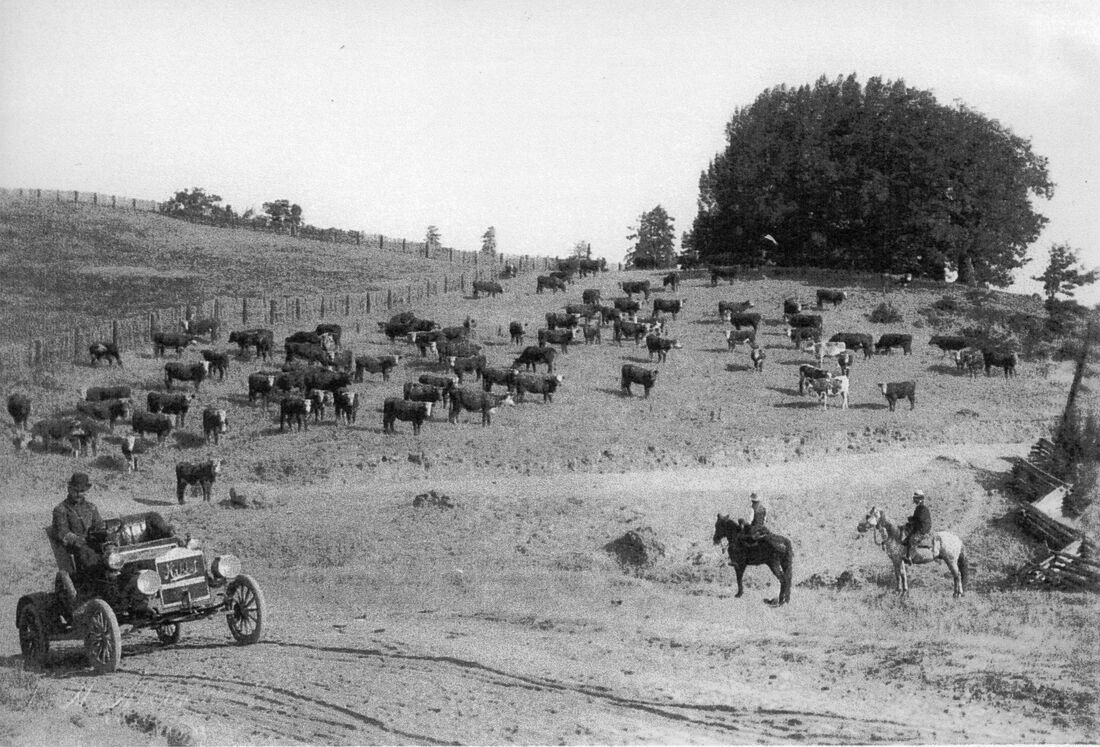
As part of a common trend across the west, cattle and pigs were staples in livestock production, as they could be used both locally and shipped to other parts of the state. Cattle were released into the countryside to graze until ready for market, and each animal was branded with a brand unique to the rancher who owned the livestock. These brands were registered to reduce the likelihood of conflict between ranchers whose cattle may have gotten mixed up with another herd or stolen. Like the miners, farmers, and commercial interests, ranchers were looking for their ‘gold mine’. In the late 1860s and 1870s, they had found it: wool from sheep.  
Picture
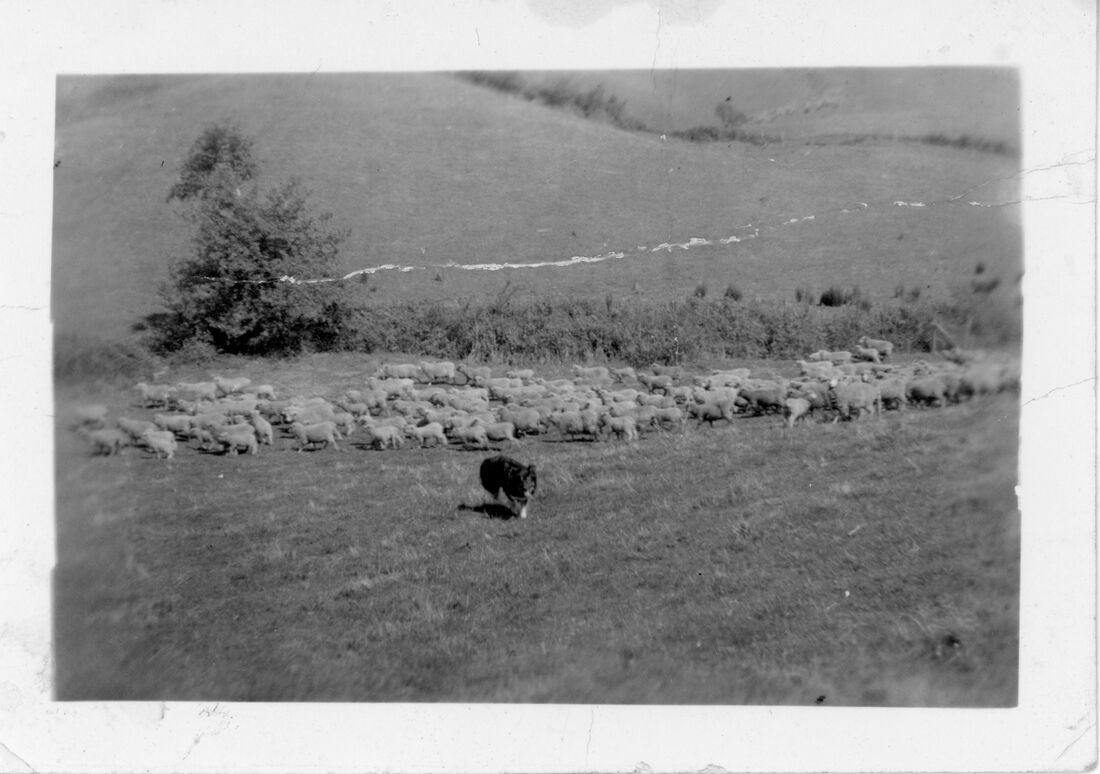
Sheep fared incredibly well on the local landscapes and could be sheared yearly without depleting the herd, unlike the yearly butchering of cattle for meat. Wool was lightweight in comparison to products like potatoes, meaning that shipping and transportation would be less expensive. Cool temperatures led to richer wool production, fetching higher prices at market. While the sheep ranchers were initially faced with opposition from cattlemen as sheep negatively impact cattle pastures, the cattlemen followed the money and many became sheep ranchers themselves. At one point, wool production reached about 500,000 pounds a year, with a third of the land in the county being dedicated to raising sheep. This wool was processed by the Eureka Woolen mill, which operated in Eureka from 1890 until 1966, when cheaper synthetic fabrics were being imported to the US. Remnants of the wool industry can be found in places like Redwood National and State Parks, which contains Lyon’s Ranch, a 5,660 acre sheep ranch which produced internationally recognized wool and was in operation for three generations before it was abandoned in 1850, added into the National Park in the 1970s, and placed on the National Register of Historic Places in 2018.
Picture
Picture
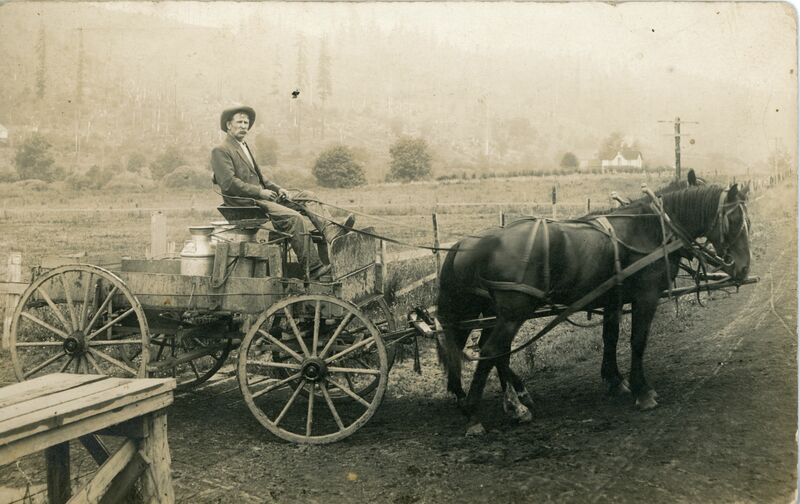
Dairy also picked up in production, however the main dairy product sold was butter as exporting milk from rural Humboldt to larger market in San Francisco was impossible. Butter served to replace potatoes as a main export and, unlike potatoes, is still a major export today.
Next time, we’ll be looking closer at the out last major group of industries: mercantile, trade, and transportation!
9 Comments

Artifact Spotlight: Cigar Silks

3/10/2019

0 Comments

 
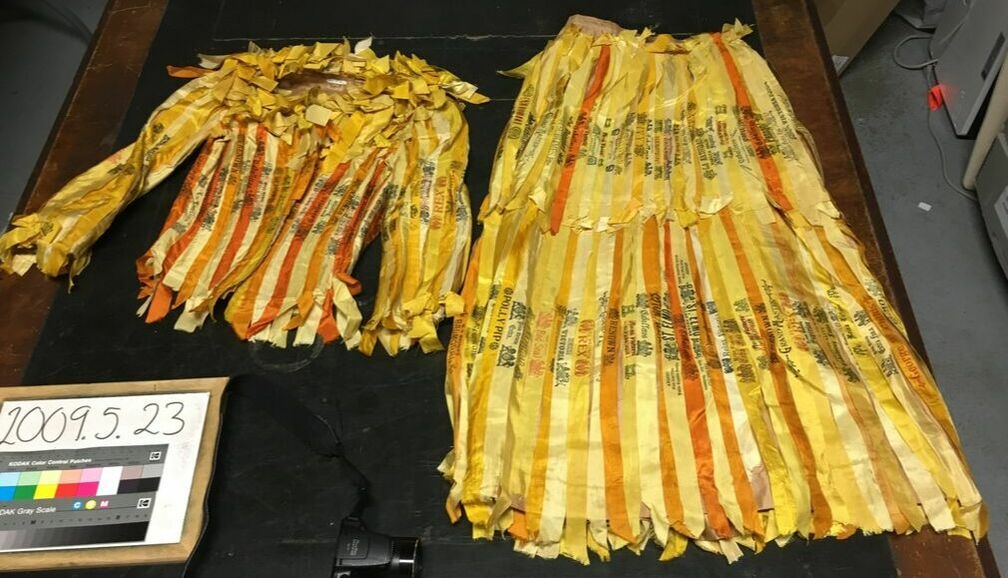
​Working in the archives is part treasure hunt, as we search through boxes for items for exhibits, blog posts, and places to put new donations. I find that it’s a lot of fun, partially because you sometimes don’t know what you’re going to find while you’re looking for something else. A few days ago, we came across a unique and fascinating find in the collections: a dress.  
Picture
We have almost 500 dresses in the Clarke Collections ranging in colors, time periods, shapes, sizes and uses. Some are handmade, others are machine made, some are two pieces like Victorian dresses, others come in one piece. This dress was in two pieces, a bodice and a skirt, with internal boning that clasped at the front. It was probably for a woman who was about 5 feet 3 inches tall, which was a relatively common height at the time. The neckline was made up on long strips of silk that flowed loosely and long strips of silk ran down the full length of the skirt. The silk was not any regular kind of silk though, but cigar ribbons, which had been sewn in layers onto a tan colored slip.
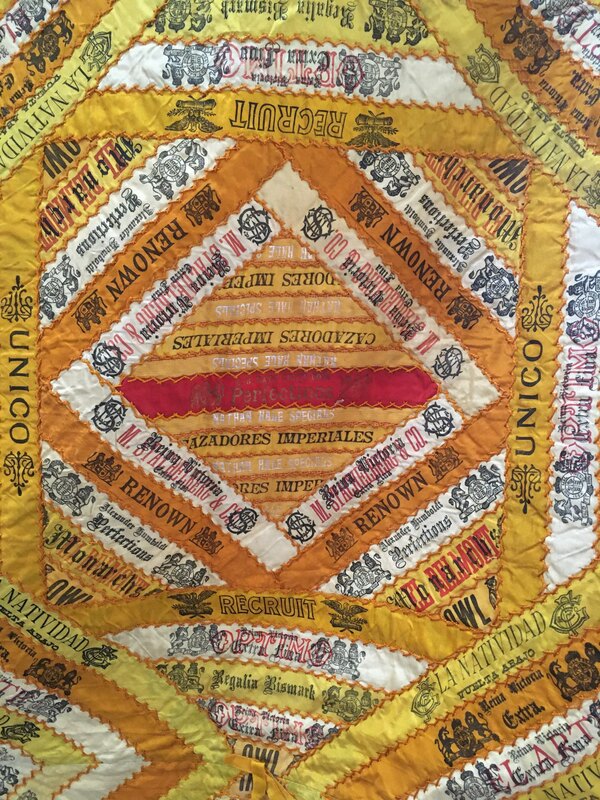
Cigar silks were ribbons that were used to bundle cigars together during processing. Smoking cigars was a popular past time during the Victorian period, and women would oftentimes collect the silk ribbons for their sewing, creating beautiful quilts from rows and rows of the silks. Cigarettes came with coupons that could be redeemed for silk pieces as well, known as cigarette premiums, which included the brand name and, oftentimes a beautiful lady or some other popular design like flowers. Collecting premiums was happening around the same time as a rise in popularity of the Crazy Quilt, which had women searching for scraps of pretty fabrics to add to their ever-growing patchwork quilts. These silks were oftentimes incorporated into other quilts, or became quilts in themselves.
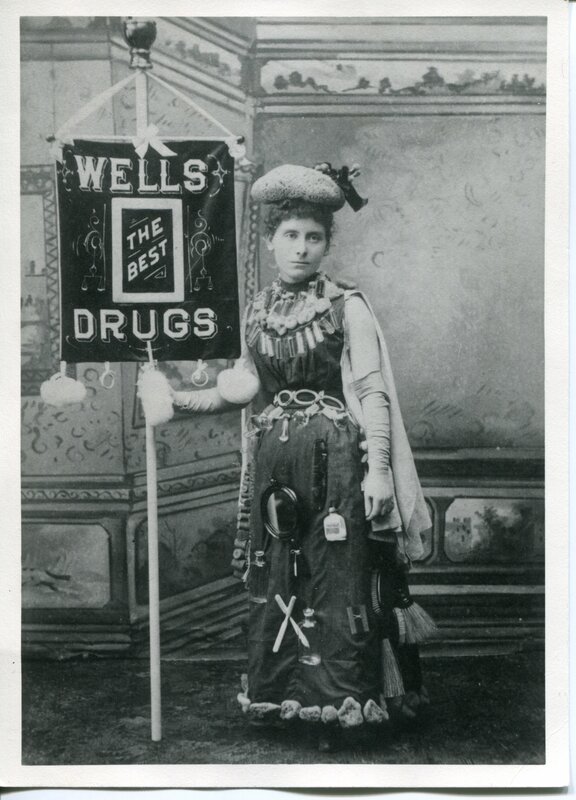
This dress, however, was an unusual find. We don’t have any information on who donated it to the museum, who wore it, or why it was made. We haven’t been able to find much in terms of other dresses like this being made. Was it made to show off a silk collection like the quilts were? Or to advertise cigars sold locally maybe, in a way similar to this photo of a model for Wells Drugs decked out in a variety of items sold at the store? We may never know.
Picture
0 Comments
<<Previous
Forward>>

    About

    Keep up with the Clarke through our Blog!
    Posts are sent out once a month with our monthly newsletter, but they post here throughout the month so check back each week for something new!

    ​Posts created by Katie Buesch, Interim Director-Curator unless otherwise noted.

      Subscribe to our newsletter!

    Subscribe to Newsletter

    RSS Feed

    Archives

    August 2022
    March 2022
    November 2021
    October 2020
    June 2020
    May 2020
    April 2020
    March 2020
    February 2020
    January 2020
    December 2019
    August 2019
    July 2019
    June 2019
    May 2019
    April 2019
    March 2019
    February 2019
    January 2019
    December 2018
    November 2018
    October 2018
    September 2018
    August 2018
    July 2018
    June 2018
    May 2018
    April 2018
    March 2018
    February 2018

Clarke Historical Museum
240 E Street
​Eureka, California 95501
[email protected]
(707) 443-1947
Open Wednesday - Sunday
11 a.m. to 5 p.m.
Closed Monday and Tuesday

​Open until 8:30 p.m. during Friday Night Markets
Open until 9 p.m. during Eureka Arts Alive
Copyright © 2025. All Rights Reserved.